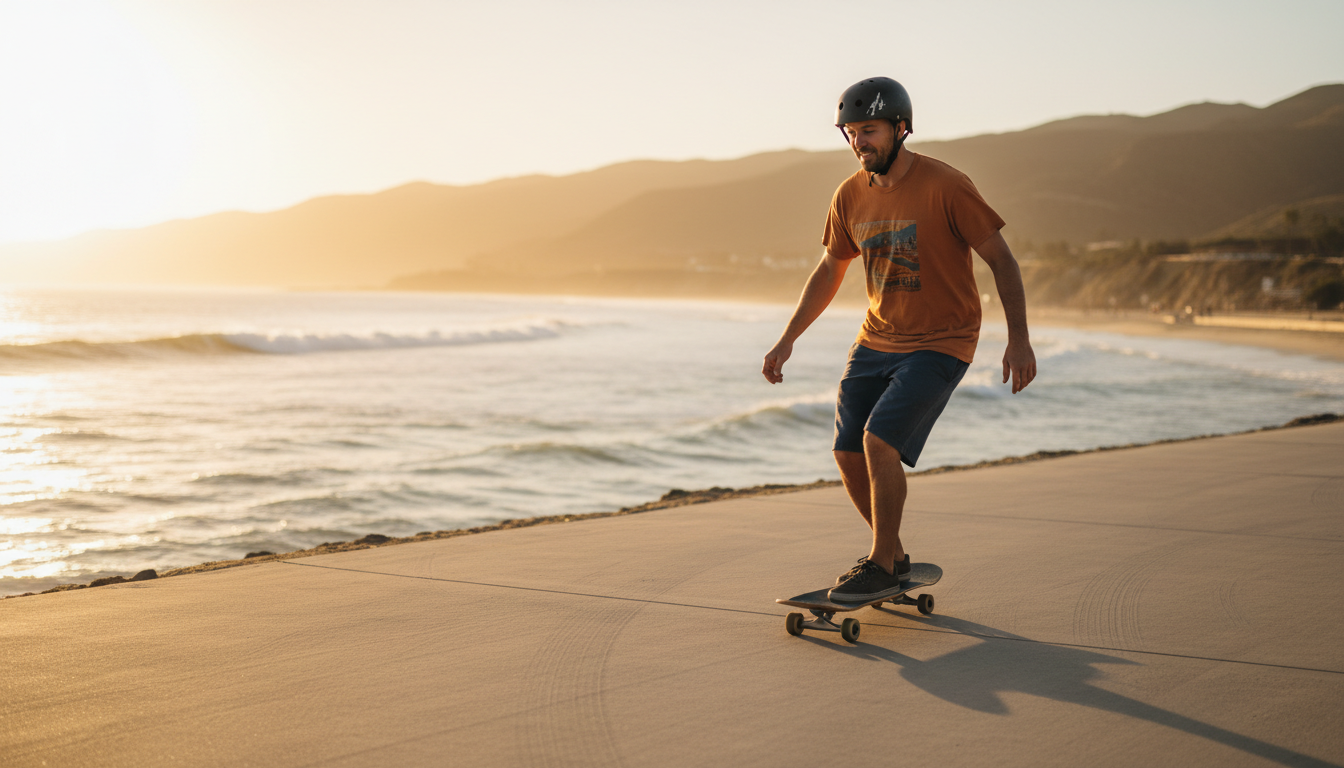
You are never too old to learn skateboarding because the sport has no age limit; adults in their 20s, 30s, and even 40s can successfully master the basics with the right approach. By using proper safety equipment and focusing on balance first, you can safely build confidence and skill regardless of when you start.
It usually starts with a lingering glance at a passing skater or a quiet desire to master the pavement, followed immediately by the nagging doubt that you have simply aged out of the sport. At twenty-five or even thirty, the concrete can feel less like a playground and more like a liability, especially when you are balancing a professional career with the physical risks of a new pursuit. However, the transition from spectator to athlete is not just possible; it is often more effective when approached with adult focus and refined motor skills. Starting now allows you to leverage your maturity to learn with a level of precision that younger riders lack. This guide explores why your young adult years are actually a prime window for development, how to overcome the social hesitation of being a beginner, and the specific safety protocols that ensure you stay injury-free while mastering the fundamentals.
The Short Answer: You Are Not Too Old to Skateboard
The short answer is no; you are not too old. The perception that skateboarding belongs exclusively to teenagers is outdated. In 2006, roughly 70 percent of skateboarders were between the ages of 12 and 17. Today, that figure has dropped to approximately 45 percent, as the 18 to 30 demographic has become one of the fastest growing segments in the global skate community.
When people ask, "am I too old to learn skateboarding," they are usually concerned about brittle bones or a lack of natural athleticism. In reality, age is far less of a factor than your current physical health and mental approach. If you possess the mobility for light aerobic activity and the focus to follow technical cues, the board is accessible to you.
Malibu Skate Academy specializes in this age group, offering a sophisticated environment that moves past the reckless stereotypes of youth. Our adult skateboarding lessons focus on a professional, systematic approach to instruction. We prioritize clean technique and a controlled learning environment, ensuring that your entry into the sport is efficient and well managed. If you are ready to move past the hesitation, you can book a free introductory lesson to see how our coaching methods translate to your specific goals.
Why the 18 to 30 Age Range is Actually Your Skateboarding Prime
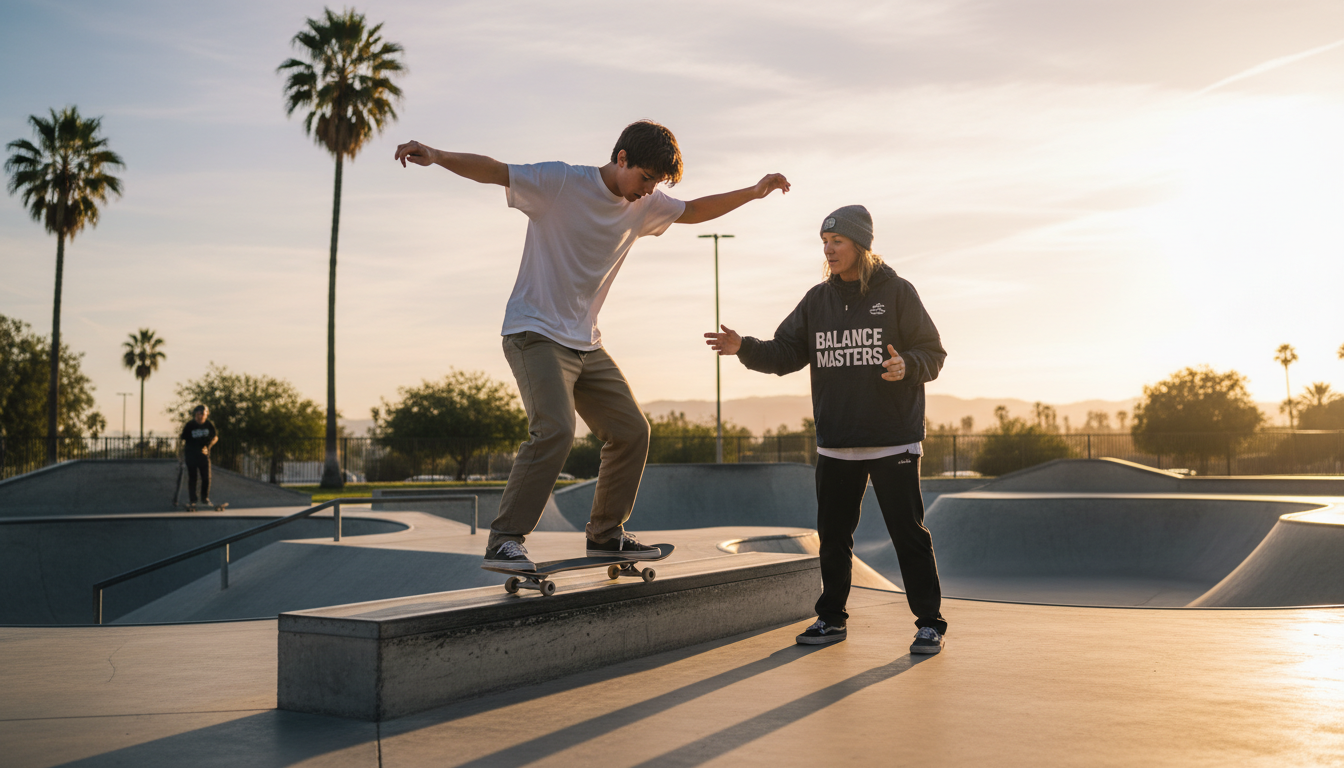
People often assume that childhood is the optimal time to start skating because of a perceived resilience to falls. However, the 18 to 30 age range offers distinct biological advantages that children lack. By this stage of development, your skeletal system is mature and your muscular foundation is established. This provides superior stability and power, which are essential for maintaining balance and navigating the varied terrain of coastal Malibu.
One of the primary reasons students ask "is it hard to learn how to skateboard as an adult?" is a fear of the technical learning curve. In reality, adult learners often progress faster than children because of higher cognitive processing. You have a refined grasp of physics, weight distribution, and mechanical leverage. When a coach explains how to shift your center of gravity during a kickturn or where to apply pressure on the tail, your brain can translate that conceptual instruction into physical action with high precision.
Attribute | Youth (Under 16) | Young Adult (18-30) |
|---|---|---|
Learning Style | Trial and error; higher recklessness | Intentional; disciplined; technical |
Muscle Stability | Developing core; high flexibility | Mature stabilizers; controlled power |
Cognitive Focus | Shorter attention spans | High capacity for technical instruction |
This maturity allows for a disciplined approach to practice. While a teenager might spend hours attempting a trick with poor form, an adult in our adult skateboarding lessons focuses on the specific mechanics of each movement. This intentionality minimizes wasted effort and reduces the likelihood of injury. You are not just reacting to the board; you are directing it through deliberate movement. By leveraging your existing athletic foundation and mental focus, you can achieve in a few months what might take a younger skater years of unguided trial and error. If you are curious about how your own physical baseline translates to the board, you can begin with a free introductory lesson to evaluate your stance and stability.
Overcoming the Social Hurdle: Is It Embarrassing to Learn as an Adult?
The psychological barrier to entry is often higher than the physical one. Many prospective skaters worry about the perceived embarrassment of being a beginner in a sport historically associated with youth. While some media portrayals lean into the awkwardness of the adult learner, the reality of modern skate culture in Los Angeles and Malibu is far more inclusive. In these communities, respect is earned through effort and persistence. Anyone putting in the work on the asphalt is viewed as a peer, regardless of their starting point.
Practicing in a professional, coached environment significantly mitigates public performance anxiety. When you enroll in adult skateboarding lessons, you shift the focus from a public spectacle to a structured training session. Working with an instructor provides a layer of professional legitimacy that allows you to tune out spectators. You are there for a specific purpose, which is to master a technical skill under expert supervision rather than navigating a crowded skatepark alone.
To stay focused on your progression, prioritize these strategies: - Target quiet, flat areas, such as the coastal paths in Malibu, for your initial sessions. - Set micro-goals for every thirty minutes, such as three clean pushes or a successful foot brake. - View your board as a piece of functional athletic equipment rather than a social accessory.
Learning to skateboard at 30 is now a common milestone for active adults looking to diversify their fitness and mobility. If you find yourself searching for skateboarding lessons near me, look for environments that prioritize technical instruction over subculture aesthetics. By beginning with a free introductory lesson, you can experience a controlled environment where the only metric for success is your own personal improvement.
The Fitness and Balance Benefits of Adult Skateboarding
Transitioning from the social mindset to the physical reality reveals that skateboarding is a sophisticated form of functional fitness. Many prospective students ask, "Does skateboarding improve balance?" The answer lies in the constant activation of the body’s proprioceptive system. Unlike a static gym environment, standing on a moving board requires your brain to process thousands of micro-adjustments every second. This strengthens the stabilizer muscles in your ankles and knees, creating a resilient foundation that translates to other sports like surfing or trail running.
During a session at Malibu Skate Academy, your core remains in a state of constant engagement to maintain your center of gravity. This is not just about abdominal strength; it involves the deep spinal stabilizers and obliques working in tandem with the lower body. Furthermore, the cardiovascular impact is significant. Research on heart rate response shows that a standard skate session can push the heart rate into aerobic and even anaerobic zones, burning calories at a rate comparable to a high-intensity interval workout.
For the 18 to 30 demographic, this offers a premium alternative to a traditional gym membership. It provides a full-body workout that emphasizes mobility and coordination over repetitive, linear movements. If you are looking for a way to stay active along the Malibu coast that feels more like a skill than a chore, adult skateboarding lessons provide the structure you need. You can experience these physical benefits firsthand by signing up for a free introductory lesson to evaluate your current baseline and see why you are never truly asking "am I too old to learn skateboarding" once you feel the workout in your legs.
Safety First: How to Start Without Risking Your Career
For students in their late twenties, the primary hesitation isn't just physical ability; it is the professional consequence of a serious injury. A sprained wrist or a concussion can mean weeks away from a keyboard or a boardroom. This reality necessitates a "smart skating" philosophy that differs fundamentally from the trial and error approach of a teenager. When asking "am I too old to learn skateboarding," many adults are actually asking if they can learn without compromising their livelihood. The answer is yes, provided you prioritize professional-grade equipment and technical falling mechanics.
Investing in a high-quality protective set including knee pads, elbow pads, and wrist guards is the first step. Low-quality gear often shifts upon impact; look for pads with thick foam backing and durable, riveted caps. Your helmet must be CPSC or ASTM certified and properly fitted to sit level on your head. In the Malibu skate community, full gear is respected as a sign of a disciplined, long-term approach to the sport.
The most critical skill we teach in our adult skateboarding lessons is the art of falling correctly. Most unguided beginners instinctively reach out with their palms during a fall, which is a primary cause of wrist fractures. Professional coaching emphasizes the "tuck and roll" technique, where you dissipate the kinetic energy of a fall by rolling across your shoulder rather than absorbing the impact through a single joint.
Gear Item | Purpose | Career Protection Factor |
|---|---|---|
Multi-impact Helmet | Prevents head injuries and concussions | Critical |
Wrist Guards | Protects against palm-strikes; essential for typing or manual work | High |
Hard-cap Knee Pads | Enables "sliding out" of falls on transitions | High |
Elbow Pads | Prevents bursitis and joint trauma | Moderate |
Learning these protocols from day one minimizes the risk of the "beginner slam," a common fall where the board slips out forward and the skater falls directly onto their tailbone or back. By prioritizing technical safety, you ensure that your progress on the board does not interfere with your performance at the office. To master these safety fundamentals in a controlled setting, you can book a free introductory lesson to practice balance and falling techniques under expert supervision.
Your First 30 Days: A Roadmap for Adult Beginners
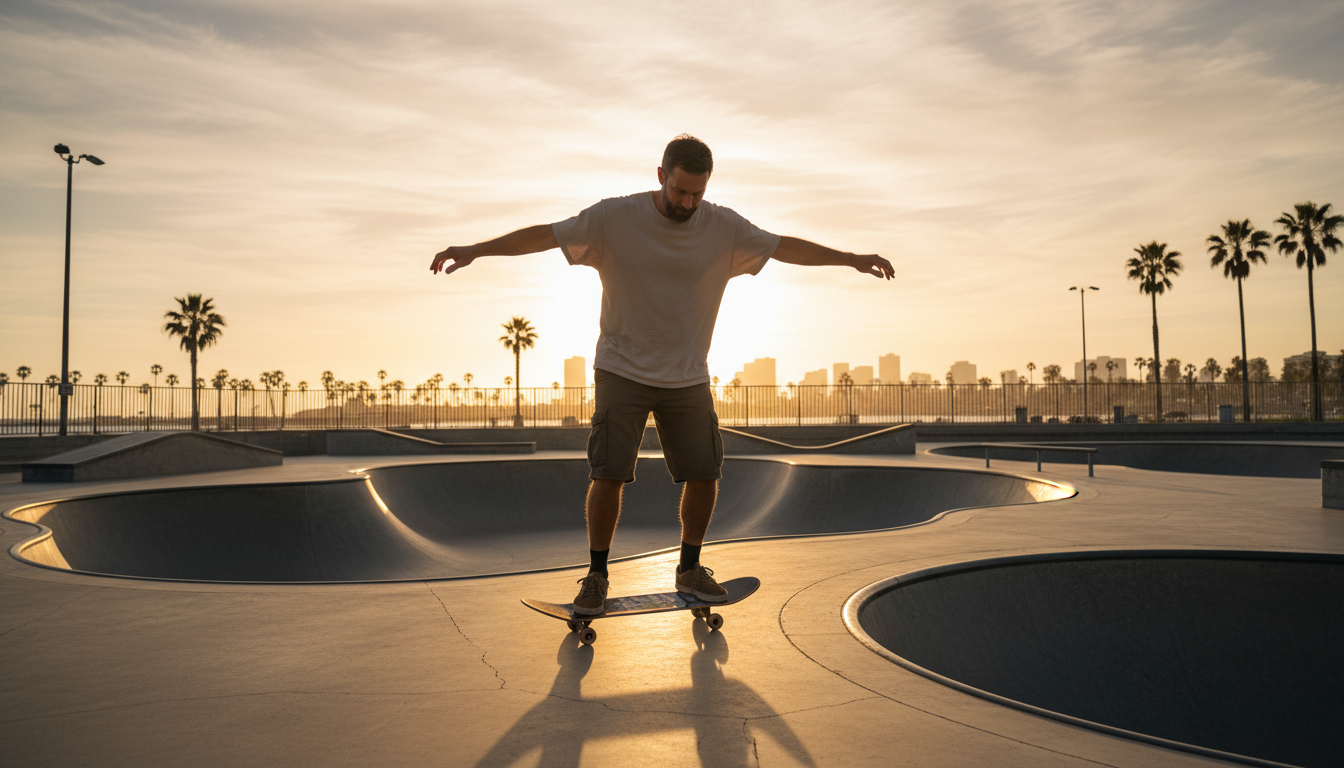
Once you have secured your safety gear, the first month of skating should focus on building a mechanical foundation. The goal is to move beyond the question "am I too old to learn skateboarding" by achieving a state of unconscious competence on the board. This begins with identifying your stance. Most skaters are Regular (left foot forward) or Goofy (right foot forward). To find yours, stand with your feet together and have a partner give you a light nudge from behind; the foot you naturally step forward with to catch your balance is typically your lead foot.
During the first week, focus exclusively on the mechanics of the push. Place your lead foot over the front bolts, pointing forward. Your back foot provides the power. It is vital to avoid mongo pushing, which is the habit of using your front foot to push while your back foot remains on the board. Pushing with your back foot keeps your center of gravity stable and allows for a faster transition into a sideways riding position.
By week two, you should integrate foot braking and kickturns. Foot braking involves keeping your weight on your lead leg while gently dragging the sole of your back shoe on the pavement to create friction. Once you can stop reliably, practice kickturns by applying slight pressure to the tail to lift the front wheels and pivot the board. The flat, wide coastal paths in Malibu provide the ideal environment for these low-impact drills.
Phase | Focus | Key Objective |
|---|---|---|
Week 1 | Stance and Pushing | Eliminate mongo habits; find natural balance |
Week 2 | Stopping and Carving | Master the foot brake; learn to shift weight between rails |
Week 3 | Kickturns | Develop 90 and 180-degree pivots for mobility |
Week 4 | Basic Trick Intro | Attempt the Ollie while maintaining board control |
When students ask "What is the first trick a skateboarder should learn?", the answer is almost always the Ollie. However, this should only be attempted once you can ride, turn, and stop with total confidence. Board comfort is the prerequisite for all technical progression. If you want to accelerate this timeline, searching for skateboarding lessons near me can connect you with an instructor who can refine your foot placement in real time. Our adult skateboarding lessons ensure that these first thirty days are productive rather than frustrating. You can start this roadmap today by booking a free introductory lesson to establish your stance and basic movement.
The Professional Advantage: Why Lessons Beat YouTube Tutorials
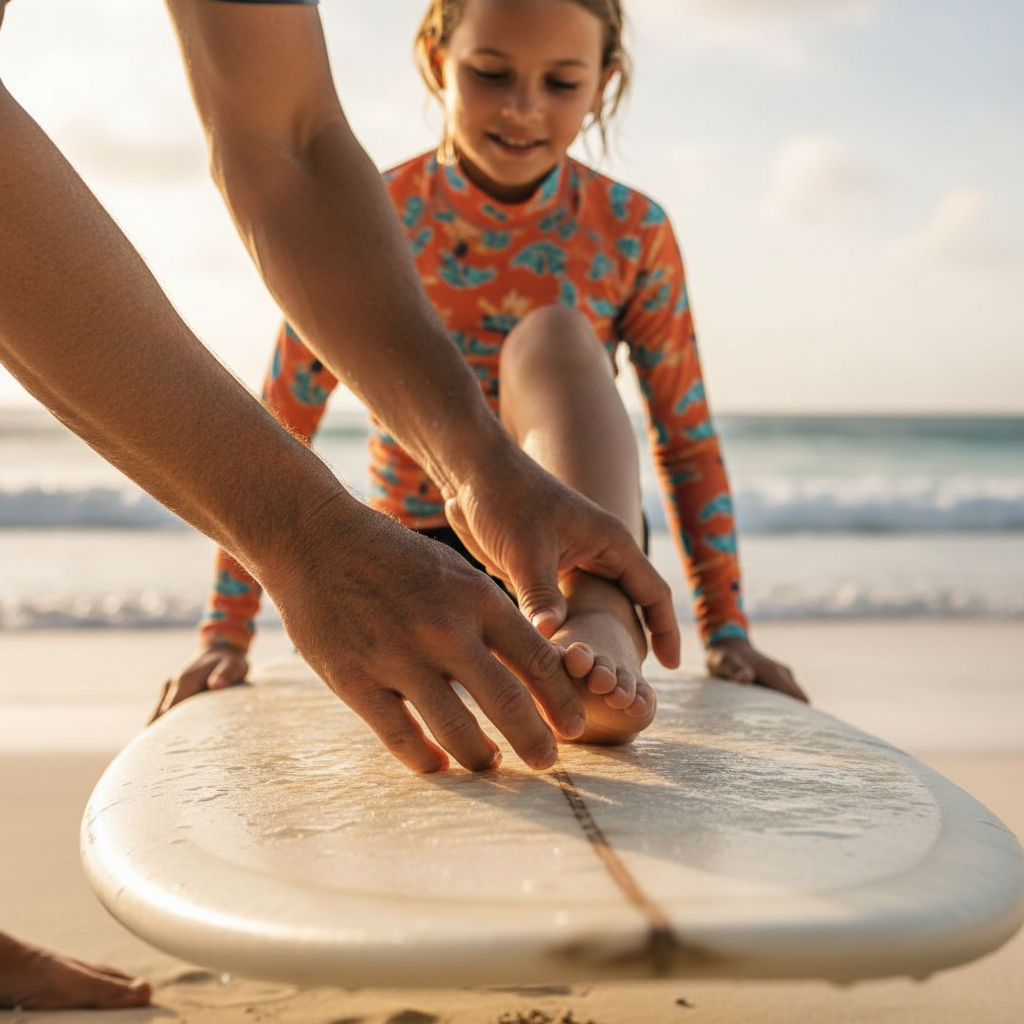
Self-teaching through digital platforms often leads to a plateau that discourages many adult beginners. While a video can demonstrate the mechanics of a kickturn, it cannot diagnose why your weight is shifted too far over your heels or identify the subtle misalignment in your lead foot. This lack of real-time feedback is often why beginners start to wonder, "am I too old to learn skateboarding," when the actual obstacle is a technical blind spot that no screen can fix.
Professional adult skateboarding lessons offer a level of efficiency that aligns with a busy professional lifestyle. Instead of spending hours deciphering the physics of a push through trial and error, a coach provides immediate kinetic corrections. This directed approach prevents the development of poor muscle memory, which is significantly harder to unlearn than it is to establish correctly from the start.
Learning Method | Feedback Loop | Skill Retention | Safety Risk |
|---|---|---|---|
YouTube Tutorials | None; self-observation only | Low; prone to bad habits | Higher due to technical errors |
1-on-1 Coaching | Instant; real-time correction | High; technical foundation | Minimized via expert oversight |
For those searching for skateboarding lessons near me, the priority should be on precision and a professional environment. A free introductory lesson serves as a low-stakes entry point to see how tactile, expert instruction outperforms the generic advice found in a comment section. You can move beyond the screen and onto the board with a curriculum designed for the adult learner's specific biomechanics.
It is clear that you are never too old to start your skateboarding journey, especially during your peak physical years. Whether you want to master the basics or build confidence on a board, starting now allows you to enjoy the unique physical and mental benefits of the sport. If you feel that you would progress faster with a bit of expert guidance, we are here to help. Our Adult Lessons provide a supportive environment where you can learn safely at your own pace. Taking that first step is much easier when you have a coach by your side.