How long to learn skateboarding typically ranges from two to four weeks for basic cruising to three to six months for mastering fundamental tricks like the ollie. Reaching an intermediate level of proficiency generally requires at least one year of consistent practice and dedication.
Staring at a brand new deck can feel both exhilarating and intimidating; especially when the learning curve seems steep and the ground feels hard. Many beginners find themselves frustrated after a few sessions, wondering if they possess the natural coordination required to stay upright. At Malibu Skate Academy, we understand that true progression is built on a foundation of refined technique rather than rushed milestones. Mastery is a journey, not a sprint, and understanding your personal timeline is essential for maintaining momentum. In this guide, we provide a realistic roadmap for your first six months on the board. You will learn how to navigate the initial ten hours of balance, move through basic maneuvers, and eventually tackle technical tricks like the Ollie. We also explore how age and environment influence your speed, ensuring you have the clarity needed to enjoy every stage of the process.
Understanding the Learning Curve: What Does Learning to Skate Actually Mean?
To accurately answer how long to learn skateboarding, we must first define what success looks like for the individual. At Malibu Skate Academy, we categorize progression into two distinct phases: functional riding and technical trick mastery.
Functional riding is the ability to navigate your environment with confidence. This includes finding your natural stance, pushing efficiently, and mastering various braking methods. With consistent practice, most beginners reach this level of comfort within two to four weeks. At this stage, you are no longer just standing on a board; you are actively controlling its direction and speed. This foundational phase is crucial because diving into tricks before mastering balance significantly increases the risk of injury.
Technical trick mastery is a more demanding pursuit. The Ollie, which serves as the gateway to almost every other maneuver, typically requires three to six months of dedicated effort to land consistently. This phase demands refined muscle memory and precise motor control.
Starting with certified private coaching helps streamline this process by ensuring your fundamentals are sound from day one. By booking a free introductory lesson, you can establish a baseline and understand the specific mechanics required to move from simply rolling to true board control.
The First 10 Hours: Mastering the Foundations of Balance
The first 10 hours of practice are the most critical in determining how long to learn skateboarding for any new rider. This period is dedicated entirely to the physics of balance. Before you can roll, you must identify your natural stance: Regular (left foot forward) or Goofy (right foot forward). This choice is intuitive, yet it dictates every movement you will make on the board. Finding your center of gravity early prevents the frustration of feeling like you are fighting against the equipment.
Mastering the push is the primary goal of these initial sessions. Many beginners instinctively try to push with their front foot or keep their weight too far back, which leads to instability. Proper technique involves keeping your front foot anchored over the front truck bolts while your back foot provides the propulsion. Once you are rolling, the next milestone is the Tic-Tac. This maneuver involves shifting your weight to the tail and making small, rhythmic pivots with the nose of the board. It teaches the subtle weight distribution necessary to navigate around obstacles and make micro-adjustments at speed.
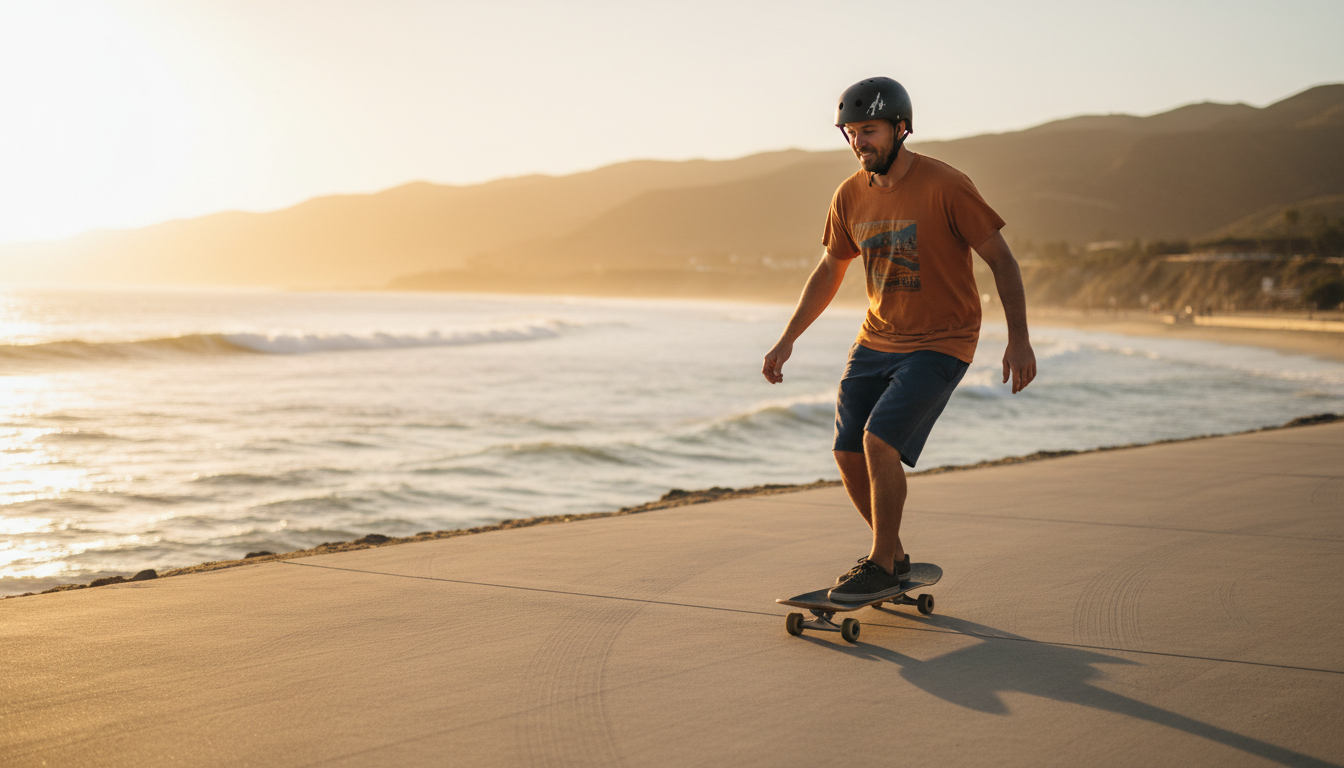
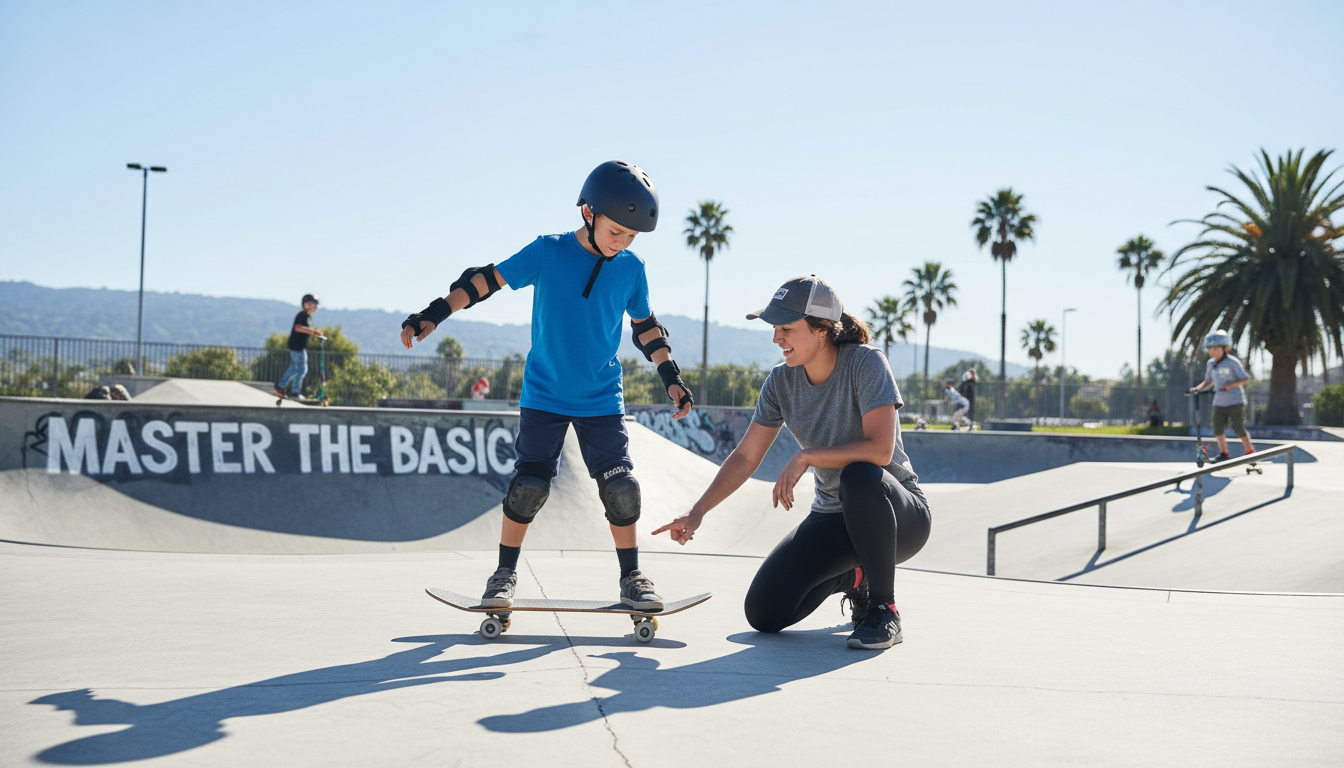
The smooth concrete found along Malibu’s coastal paths serves as the gold standard for these initial sessions. High-quality surfaces allow the wheels to glide predictably, reducing the vibration that often unnerves beginners on rougher asphalt. Certified private coaching provides the most value during these first 10 hours by correcting posture and shoulder alignment in real-time. By starting with a free introductory lesson, students ensure they are not building muscle memory for inefficient habits that would later hinder their progression into technical maneuvers.
Weeks 2 to 4: Gaining Confidence and Basic Maneuvers
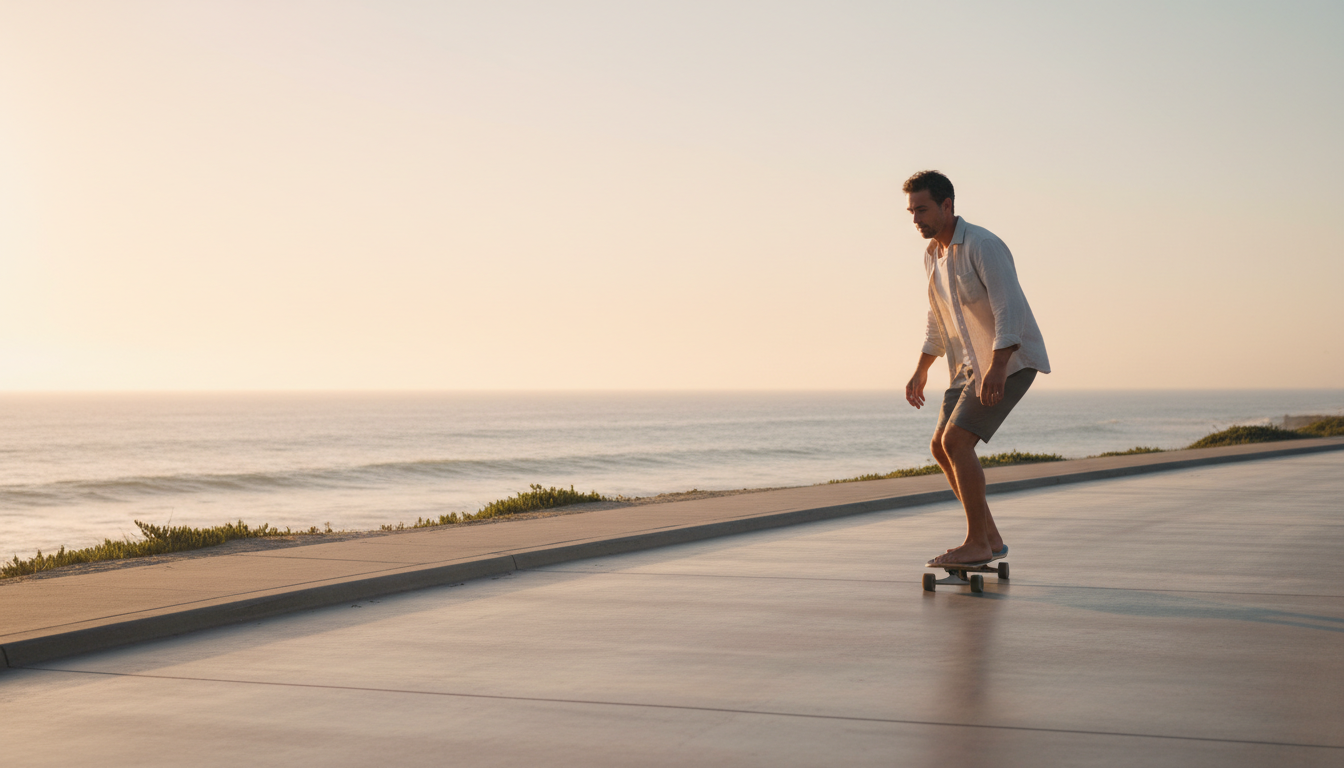
After the initial ten hours, the focus shifts from simply staying upright to directing the board with intent. Between weeks two and four, students begin to navigate the transition from flat ground to gentle inclines. This phase is defined by three core competencies: carving, kickturning, and controlled deceleration.
Carving involves utilizing the trucks' geometry by leaning into the edges of the board to create fluid, sweeping turns. This is where you begin to feel the flow of the ride. Conversely, kickturns require a momentary lift of the nose to pivot the board on the rear wheels, which is the first step toward advanced board control. Mastering foot braking during this window is also vital; it ensures you can safely manage speed as you introduce slight elevations to your practice.
We observe a distinct divergence in how long to learn skateboarding based on age demographics. Students in the 7 to 16 age range typically possess a lower center of gravity and a natural lack of inhibition, which allows them to experiment with balance more freely. In contrast, those enrolled in our adult skateboarding lessons often exhibit superior motor control and can intellectually process the mechanics of a turn much faster. However, adults frequently navigate a more pronounced fear of falling, which can slow progression if not addressed.
Certified private coaching helps mitigate this psychological barrier by providing a structured, safe environment for these maneuvers. By the end of the first month, the goal is for the board to feel like an extension of the body rather than a foreign object. For those ready to move past the basics, a free introductory lesson can help identify which specific maneuvers require the most refinement.
Months 2 to 6: Your First Technical Tricks and the Ollie Wall
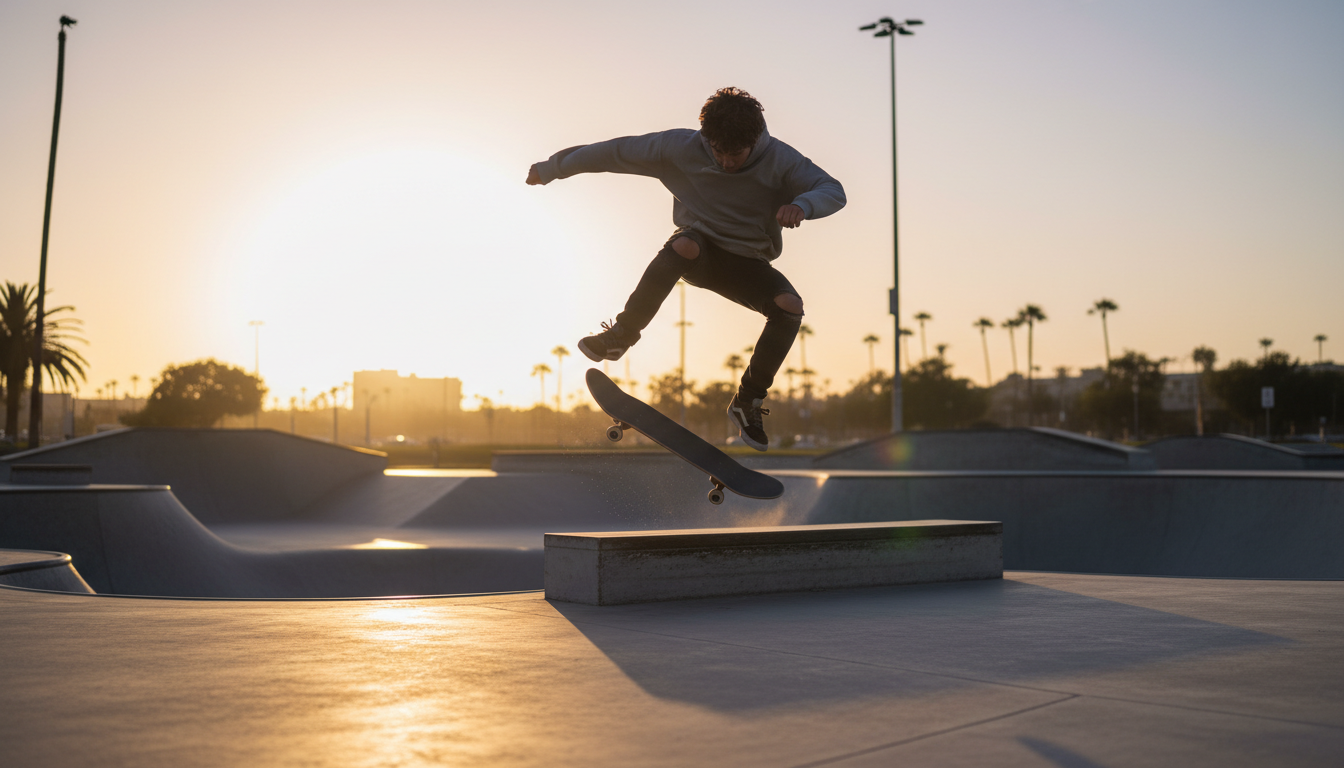
Between months two and six, skaters enter the most challenging phase of their initial development. This period is defined by the Ollie Wall, a significant plateau where many beginners struggle to advance. The Ollie is the gateway to nearly every technical maneuver, yet it requires a complex coordination of two simultaneous movements: the forceful snap of the tail against the ground and the precise sliding of the front foot up the grip tape. Mastering this timing takes months because it demands the creation of new muscle memory that overrides the natural instinct to keep both feet planted on a stable surface.
While the Ollie is the primary focus, this window is also the ideal time to develop other foundational skills that build board control. These maneuvers diversify your skill set and prevent the frustration that comes with focusing solely on one difficult trick. During this phase, a structured practice routine should include:
Stationary and rolling manuals: balancing on the back two wheels to find your center of gravity.
Basic transitions: learning to roll down banks and through small concrete transitions to manage changing momentum.
Pop Shuv-its: introducing the concept of board rotation beneath your feet.
Powerslides: utilizing wheel friction to scrub speed and improve lateral control.
This is the stage where self-taught skaters frequently lose momentum. Without external feedback, it is difficult to identify if your timing is off or if your weight is poorly distributed. Certified private coaching bridges this gap by providing technical breakdowns that a video tutorial cannot offer. For those in the older demographic, adult skateboarding lessons focus on the biomechanics of these tricks to minimize impact while maximizing efficiency. If you find yourself stuck at the Ollie Wall, a free introductory lesson can provide the specific correction needed to finally get four wheels off the ground. This period ultimately determines how long to learn skateboarding at a high level, as the habits formed here dictate your future technical ceiling.
Is Skateboarding Hard to Learn as an Adult?
Starting at age 27 or 30 often carries the misconception that the window for athletic development has closed. While it is true that adults do not possess the same physiological bounce-back as a seven-year-old, they bring a distinct advantage to the learning process: disciplined focus. Adults are generally better at deconstructing complex movements and sticking to a structured practice routine, which can actually shorten how long to learn skateboarding fundamentals compared to a younger student who lacks patience.
The primary barrier for the 18 to 30 demographic is the psychological fear of injury. This is effectively managed through the use of high-quality safety gear. Beyond a standard helmet, wrist guards are essential for adults, as the instinct to break a fall with the hands is stronger in fully developed bodies. Utilizing knee and elbow pads allows for bailing safely, turning a potential impact into a controlled slide.
Malibu’s skate culture is remarkably inclusive, and our adult skateboarding lessons prove that progress is about refined technique rather than raw athleticism. By utilizing certified private coaching, you bypass the awkward trial and error phase that often leads to burnout. If you are concerned about your starting point, a free introductory lesson provides a low-stakes environment to test your balance under professional supervision and build the confidence necessary to progress.
Factors That Influence Your Progression Speed
The duration of your journey is not fixed; several specific variables dictate how long to learn skateboarding effectively. Understanding these factors allows you to optimize your routine for faster, safer results.
Consistency of Practice: Skaters who practice for twenty minutes daily often progress faster than those who spend four hours on the board once a week. Frequent, shorter sessions solidify muscle memory more effectively than sporadic, long sessions.
Equipment Integrity: Learning on a low quality board from a big box store can actually hinder development. Professional grade decks, responsive trucks, and high rebound wheels provide the stability that a toy board lacks. A board that does not turn or roll correctly forces the skater to fight the equipment rather than learn the movement.
Surface Quality: Practicing on the smooth, predictable concrete of Malibu boardwalks reduces the physical vibration and unpredictable friction found on rough asphalt. This allows you to focus entirely on your form without the distraction of cracks or pebbles.
Instructional Oversight: Utilizing certified private coaching is the most significant shortcut to proficiency. A professional instructor provides an immediate feedback loop, identifying subtle posture errors that a beginner cannot feel. This expert intervention can often condense three months of frustrating trial and error into four weeks of focused, linear progress.
New skaters can assess their current equipment and technical goals during a free introductory lesson to ensure their setup is not working against their natural progression.
Safety Gear and Environment: Essentials for Faster Learning
Safety gear is often viewed solely as a preventative measure, but its true value lies in how it shortens the learning curve by building mental confidence. Wearing a high-quality helmet, wrist guards, and knee pads creates a safety net that allows you to commit to new movements without the paralyzing fear of a hard fall. This mental shift is critical; a skater who commits to a push or a kickturn with full weight distribution learns faster than one who hesitates. For students in adult skateboarding lessons, proper gear provides the security needed to overcome the natural risk-aversion that comes with age.
The physical environment also dictates your success. We recommend starting on the smooth, debris-free concrete found at Malibu Legacy Park or the wide coastal paths. These areas offer the consistent, flat surfaces required for mastering the foundations described in earlier sections. By combining high-quality equipment with the professional setting of certified private coaching, you eliminate the variables that cause frustration. To see how the right environment transforms your progress, you can begin with a free introductory lesson and establish a safe, professional foundation for your journey.