Yes, skateboarding is good exercise because it provides a high intensity, full body workout that improves cardiovascular health, balance, and coordination. It engages major muscle groups like the core and legs while burning significant calories, offering diverse physical and mental health benefits for adults.
Most fitness routines eventually feel like a repetitive chore. You spend hours on a treadmill or lifting weights in a windowless gym; yet, you rarely experience the exhilaration of true, functional movement. This stagnation is often where physical and mental progress stalls. At Malibu Skate Academy, we believe exercise should be as engaging as it is effective. Skateboarding offers a sophisticated alternative to traditional cardio, blending high intensity interval training with deep core stabilization. In this guide, we break down the physiological data behind every push and carve. You will learn exactly how many calories you burn compared to cycling, which specific muscle groups benefit from a park session, and how the flow state achieved on a board acts as a powerful tool for stress relief. Whether you are cruising the coast or mastering technical transitions, it is time to view your board as a high performance fitness instrument.
Why Skateboarding Counts as a Legitimate Full Body Workout
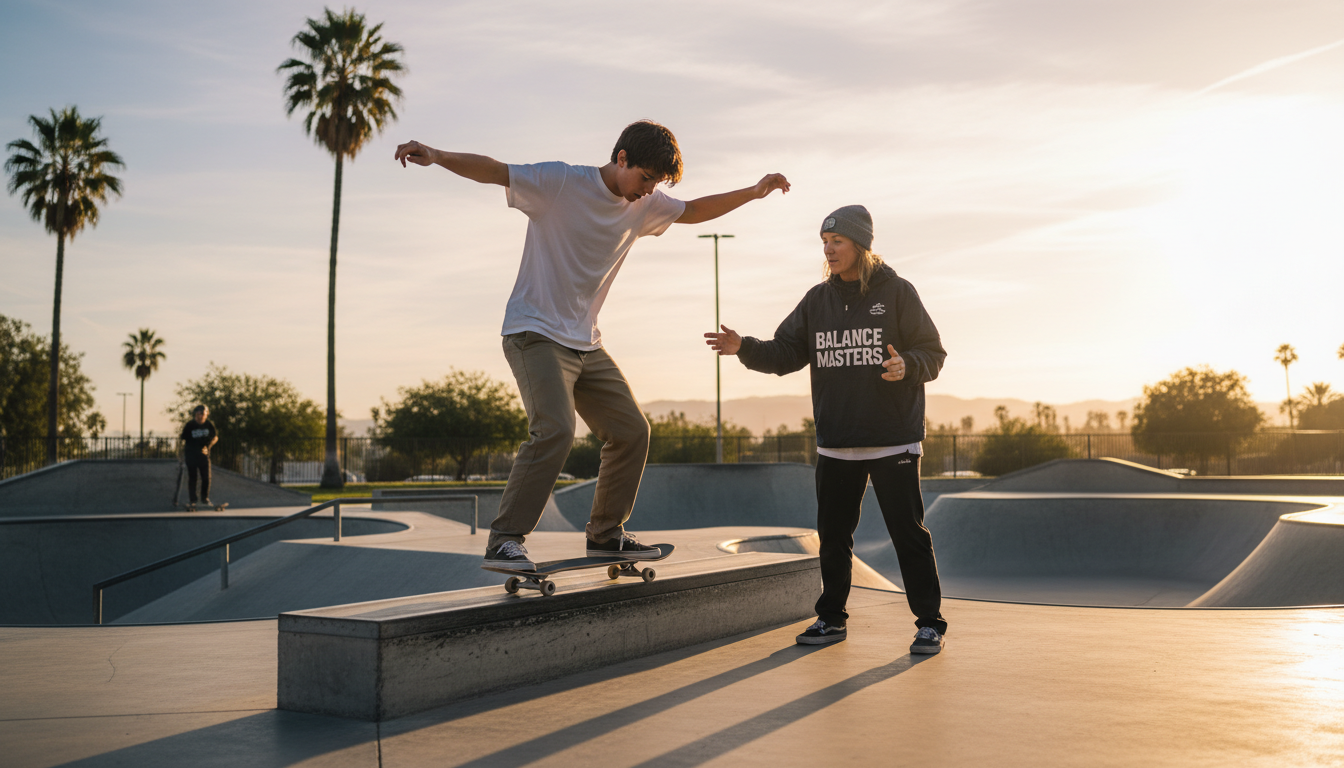
When students first arrive for our skateboarding lessons near me, they often ask a fundamental question: is skateboarding good exercise, or is it simply a recreational hobby? From a professional coaching perspective, the answer lies in the unique physiological demands placed on the rider. Skateboarding is a sophisticated, multi-planar movement that integrates plyometrics, core stabilization, and cardiovascular endurance into a single session. Unlike the linear, repetitive motion of a treadmill, skating requires the body to operate in three dimensions. This necessitates constant micro-adjustments in the ankles, knees, and hips to maintain balance on a shifting surface.
These small, rapid corrections build a level of functional strength and proprioception that traditional stationary equipment often misses. Because you are constantly countering gravity and momentum, you are engaging in a comprehensive full body workout. A single push involves an explosive contraction of the calves and glutes, while the act of staying upright demands deep, sustained engagement of the core. Simultaneously, your stabilizer muscles are firing to navigate the texture of the pavement.
At Malibu Skate Academy, we view this as "disguised exercise." In a traditional gym, the focus is frequently on the clock or the repetition count, which can lead to mental fatigue. On a board, your focus shifts to the line you are carving or the mechanics of your stance. You reach a high heart rate and significant muscle activation without the monotony of a standard workout circuit. For those considering adult skateboarding lessons, this blend of high-intensity movement and technical skill provides a sophisticated alternative to the standard fitness routine.
The Calorie Burn: How Skateboarding Compares to Running and Cycling
Moving from the qualitative benefits of functional movement to the quantitative data of caloric expenditure provides a clearer picture of efficiency. On average, moderate skateboarding burns between 300 and 500 calories per hour. This figure fluctuates based on the rider’s weight, the incline of the pavement, and the specific style of riding. Many of our students in Los Angeles frequently choose between a sunset walk on the Malibu bluffs or a bike ride along the coast. While walking is excellent for low impact movement, skateboarding offers a significantly higher metabolic demand.
When addressing the query of is skateboarding better exercise than walking, the evidence lies in heart rate and muscle recruitment. Walking typically maintains a low, steady heart rate. In contrast, even basic skating requires the body to recruit more muscle fibers to manage gravity and surface friction, resulting in a higher caloric burn per hour.
The fitness profile of a session also changes based on your goals. Cruising along the beach paths functions as steady state cardio, comparable to a moderate jog or a cycling session. Conversely, trick practice operates as High Intensity Interval Training, or HIIT. The explosive energy required for an ollie or a kickflip followed by a short recovery period mirrors professional athletic conditioning. This variability allows skaters to target different energy systems within a single session, making it a more versatile workout than most traditional linear activities.
Targeted Muscle Groups: Does Skateboarding Build Abs and Legs?
While we have established that is skateboarding good exercise for the heart, its impact on specific muscle groups is equally profound. Prospective students frequently ask: does skateboarding build muscle and, more specifically, will skateboarding get me abs? The answer is rooted in the asymmetrical demands of the sport. Your "push" leg, which leaves the board to provide propulsion, develops power in the quadriceps, calves, and glutes. Meanwhile, the "balance" leg remains planted, recruiting the hamstrings and a complex network of stabilizer muscles in the ankle and hip to maintain control over the deck.
The core is the silent engine of every session. Because a skateboard is an inherently unstable platform, staying upright requires constant abdominal engagement. This isometric tension, combined with the rotational movements of carving, targets the obliques and deep stabilizers. For those advancing to technical tricks, the "pop" mechanic used for an ollie functions as explosive plyometric training, engaging fast-twitch fibers through a rapid, vertical snap.
The result of this training is not the bulky mass of a bodybuilder, but the lean, functional strength characteristic of a high-performance athlete. This is a practical physique built for agility and endurance rather than just appearance. At Malibu Skate Academy, we emphasize this development through structured adult skateboarding lessons that prioritize proper form to maximize these physical gains while minimizing unnecessary strain.
The Mental Landscape: Stress Relief and the Flow State
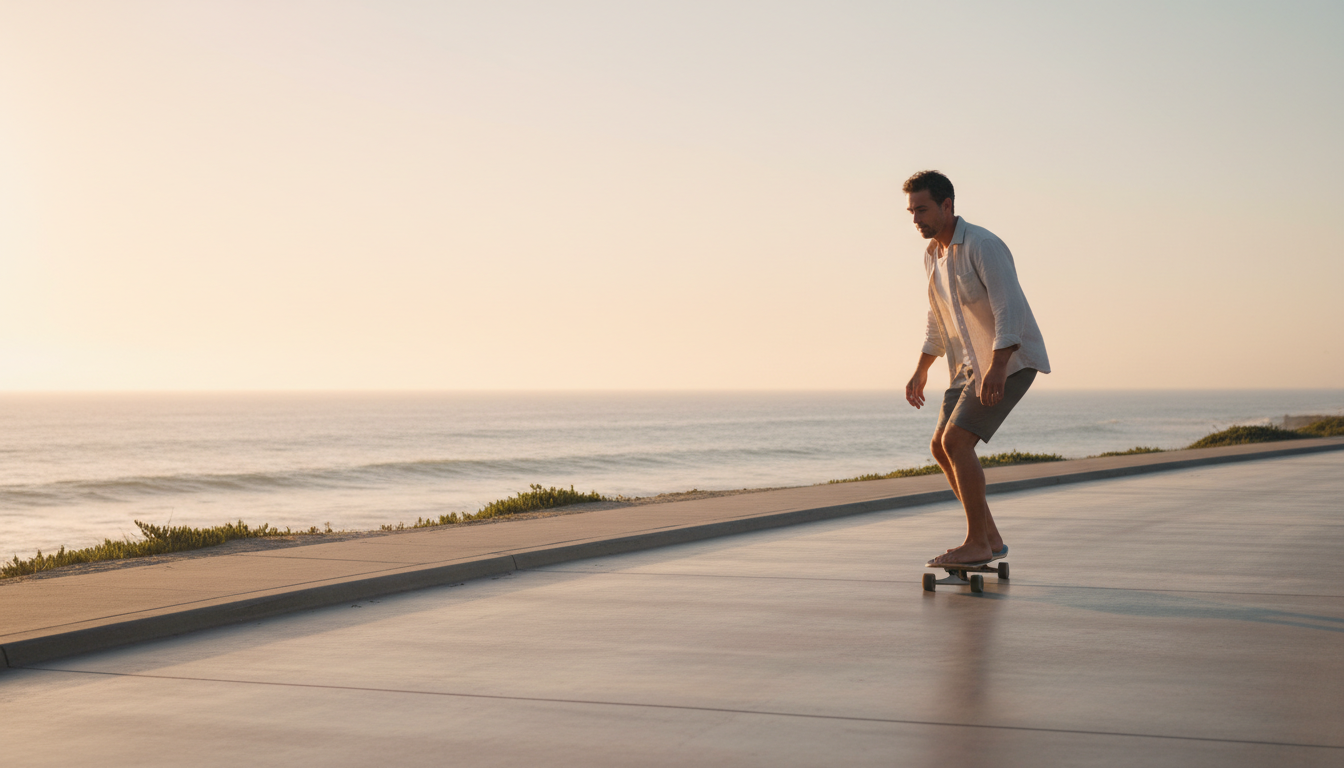
The psychology of skateboarding offers a mental reset that is often as valuable as the physical exertion itself. When you step onto a board, you enter what psychologists call a "Flow State," a cognitive zone where the challenge of the movement requires absolute presence. You cannot dwell on career stressors or academic deadlines while simultaneously calculating the speed needed to navigate a curve or maintain your balance on a shifting surface. This forced mindfulness creates a profound sense of escapism, providing a rare opportunity to disconnect from digital noise and focus entirely on the tactile relationship between your feet and the deck.
For our students aged 18 to 30, the sport serves as a practical laboratory for resilience. Unlike many fitness modalities where progress is linear, skateboarding is defined by the cycle of attempt, failure, and recalibration. The act of falling and immediately getting back up builds a specific type of mental grit. This process teaches the brain that failure is merely a data point rather than a permanent setback, a perspective that is incredibly beneficial when managing the high pressure environments of modern professional life.
When evaluating is skateboarding good exercise, it is essential to include this neurological conditioning. Those searching for skateboarding lessons near me are often surprised to find that the workout extends far beyond the legs and core. By enrolling in adult skateboarding lessons, riders develop a sophisticated sense of perseverance. This mental toughness, combined with the stress-reducing effects of the flow state, makes the board a powerful tool for holistic health in an increasingly fast-paced world.
Cruising Malibu vs. Skatepark Sessions: Which Is the Better Workout?
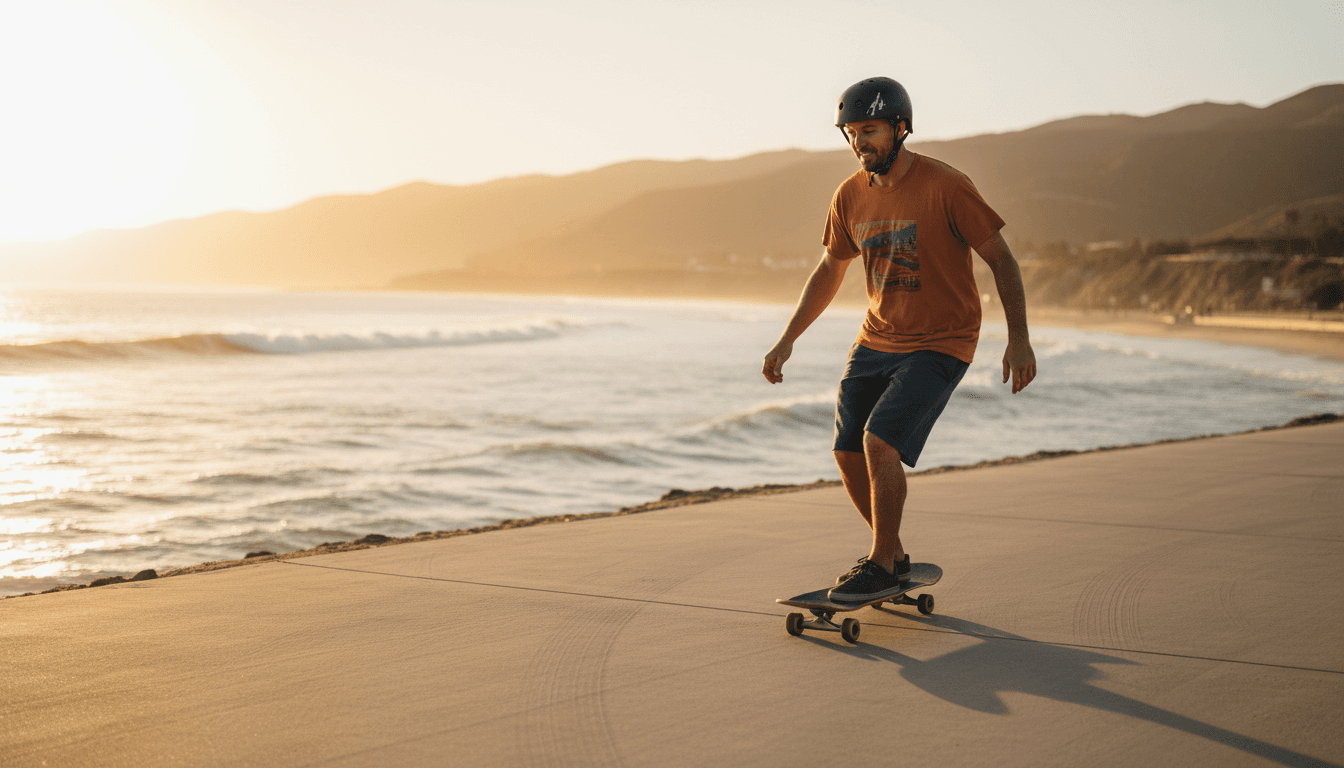
The mental grit developed on the board finds its physical expression in the diverse terrain of the Los Angeles coast. When determining if is skateboarding good exercise for your specific health goals, the terrain you choose dictates the physiological outcome. Cruising the coastal pathways near Point Dume serves as a primary aerobic workout. This steady state endurance training utilizes rhythmic pushing to maintain a consistent heart rate, allowing you to burn significant calories while absorbing the ocean breeze and the Malibu sunset.
A session at Malibu Bluffs Park offers a starkly different stimulus. This environment is anaerobic and power focused, requiring explosive bursts of energy to navigate transitions or clear obstacles. While cruising is akin to a long distance run, a park session functions like a high intensity interval circuit. Data indicates that intense park riding can burn up to 450 calories in just thirty minutes, nearly double the rate of casual cruising. For those looking for skateboarding lessons near me, we recommend a hybrid approach. Integrating both steady state cruising and technical adult skateboarding lessons creates a balanced fitness profile that targets both cardiovascular longevity and raw functional power.
A Coach’s Perspective: How to Optimize Your Session for Fitness
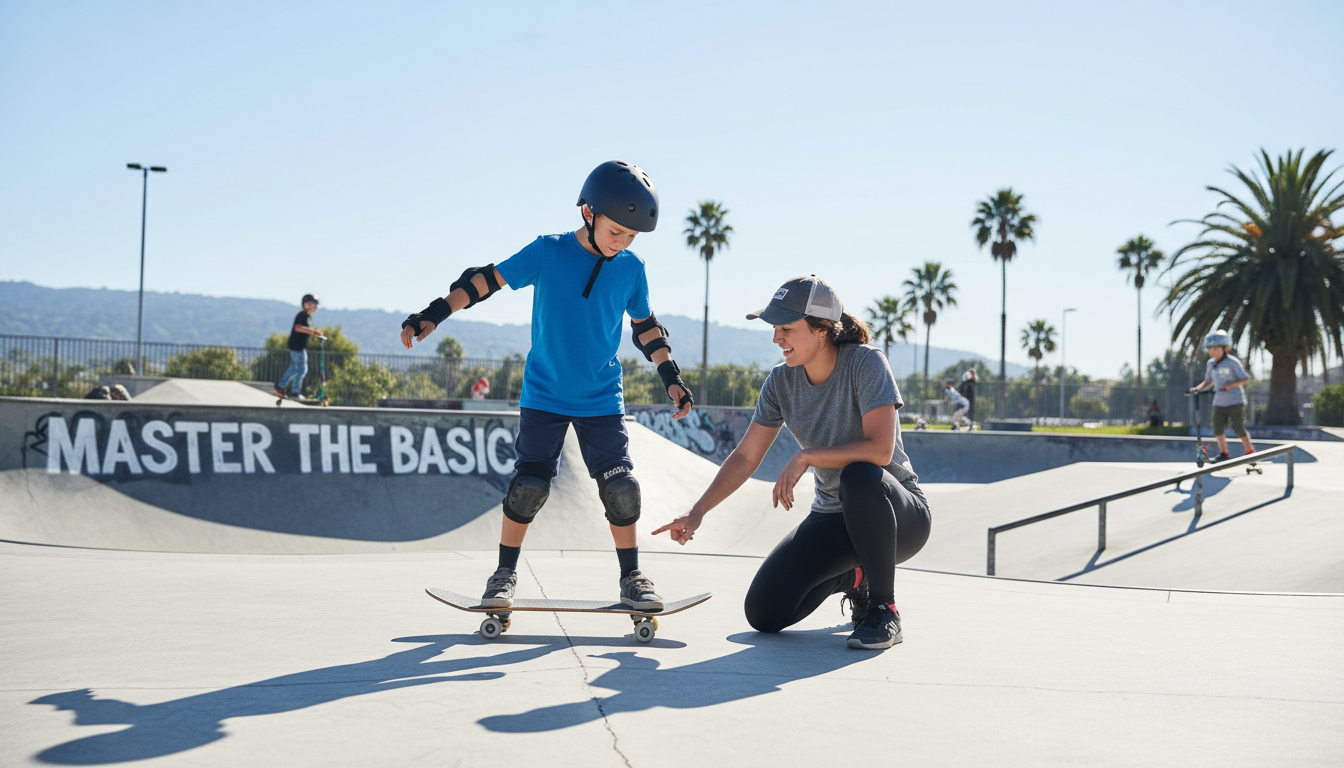
To move beyond casual recreation and truly answer if is skateboarding good exercise for your specific physiology, you must apply a structured training lens to your time on the board. One of the most overlooked techniques in professional coaching is the "switch push." Most skaters develop a dominant leg for propulsion, which can lead to significant muscular imbalances over time. By dedicating a portion of your session to pushing with your non-dominant foot, you force the stabilizer muscles in the opposing hip to engage, ensuring symmetrical development in the glutes and lower back.
You can further optimize caloric burn by treating your ride like a track workout. Incorporate high-intensity intervals by pushing at maximum effort for 30 seconds, followed by a 60-second recovery cruise. This protocol elevates your heart rate into the anaerobic zone, stimulating greater metabolic afterburn than a steady-state ride. This method transforms a simple commute into a sophisticated cardiovascular challenge.
Before starting, always execute a dynamic warm-up. Focus on ankle circles, leg swings, and thoracic rotations to prepare the nervous system for the rapid micro-adjustments required at speed. While independent practice is vital, enrolling in skateboarding lessons near me allows beginners to bypass the steep initial learning curve. Professional adult skateboarding lessons ensure you master the mechanics of the "push" safely; this helps you reach the physical intensity required for a legitimate workout much faster by skipping the early frustration and frequent falls of self-teaching.
Common Fitness FAQs: Fat Loss and Age Barriers
Refining the question of is skateboarding good exercise through a technical lens often leads to specific concerns regarding weight management and age. When evaluating fat loss, skateboarding functions as a powerful tool for caloric expenditure. High intensity sessions at a park can burn up to 450 calories in just thirty minutes; when paired with a caloric deficit, this creates a significant metabolic impact that rivals traditional cardiovascular training.
Regarding the question of age, 26 is far from too late to begin. At Malibu Skate Academy, we specifically cater to a demographic of 18 to 30 year olds who are looking for sophisticated ways to stay active beyond the traditional gym environment. Starting in your twenties or thirties allows for a disciplined approach to the mechanics of the sport, often resulting in faster technical progress than younger students who may lack the same focus on form.
Common Question | Professional Perspective |
|---|---|
Is it good for fat loss? | Yes, high metabolic demand creates a significant caloric burn. |
Is 26 too late to start? | No, our 18 to 30 program is designed specifically for this demographic. |
Is skateboarding hard? | The technical learning curve is what makes the workout effective. |
While skateboarding presents a legitimate learning curve, that difficulty is the catalyst for the workout's effectiveness. The mental and physical effort required to master a stable stance is what forces the body to adapt and grow stronger. If you are ready to begin, booking skateboarding lessons near me provides the expert oversight needed to navigate these early challenges. Our adult skateboarding lessons ensure that you focus on proper form from day one, maximizing both safety and fitness results.