Learning how to fall safely on a skateboard requires dissipating impact through rolling and sliding instead of bracing with stiff limbs. Skaters should stay loose, tuck their chins, and use a parkour-style roll or a butt-slide to distribute the force of the fall across a larger surface area.
Every skater recognizes that sudden, stomach dropping moment when the pavement rushes up to meet them. It is the inevitable price of progression; however, a single poorly handled slam can sideline your progress for weeks. At Malibu Skate Academy, we view falling not as a failure, but as a critical technical skill that requires its own dedicated practice. Mastering the physics of impact is your best insurance policy for longevity in the sport. In this guide, we will cover the essential mechanics of the shoulder roll, why you must never use your hands to break a fall, and how to utilize your pads for controlled knee slides. By the end of this article, you will have the practical tools to turn a potential injury into a graceful recovery; ensuring you spend more time on your board and less time on the sidelines.
Why Learning to Fall is the Most Important Skateboarding Skill
In the culture of high performance skateboarding, falling is often misunderstood as a sign of failure. At Malibu Skate Academy, we reframe this perspective. Falling is not a mistake; it is a fundamental technical skill that every student must master to ensure longevity in the sport. To progress, you must first understand the distinction between a slam and a bail.
A slam is an uncontrolled impact where the skater is caught off guard by the terrain or a sudden loss of balance. Conversely, a bail is a calculated, controlled exit from a trick that is not going as planned. The ability to transition from a potential slam into a clean bail is what differentiates a novice from a professional. Even the most elite skaters fall approximately 90 percent of the time. Their secret to staying injury free lies in their mastery of energy dissipation. Instead of meeting the concrete with rigid resistance, they learn to redirect that force through fluid motion.
Prioritizing this technique during skateboarding lessons near me is the most effective way to build a sustainable practice. By learning how to fall safely on a skateboard, you are not just avoiding a one time bruise. You are building the muscle memory necessary to protect your joints and maintain the confidence required to tackle more complex maneuvers over a decades long skating career.
Essential Gear to Minimize Impact During a Fall
To effectively dissipate energy, a skater must have the proper equipment to facilitate movement across the pavement. While helmets are non-negotiable for head protection, high-quality pads serve a functional role beyond simple cushioning. Hard-shell knee and elbow pads, typically constructed with high-impact ABS plastic caps, allow you to slide out of a fall. On concrete, friction is the enemy. By dropping onto these caps, you redirect vertical force into horizontal motion, sliding safely until your momentum fades. This is particularly valuable during adult skateboarding lessons where managing increased body weight requires better impact redirection.
At Malibu Skate Academy, we view safety gear as a professional uniform for progress rather than a hindrance. Wrist guards provide structural support to the carpal bones, while knee pads enable the specific sliding techniques used in bowl and transition skating. Wearing this equipment is a tactical choice that allows students to push their limits with confidence. Every free introductory lesson begins with a gear assessment to ensure you are equipped to master the physics of a controlled bail.
The Golden Rule: Never Catch Yourself With Your Hands
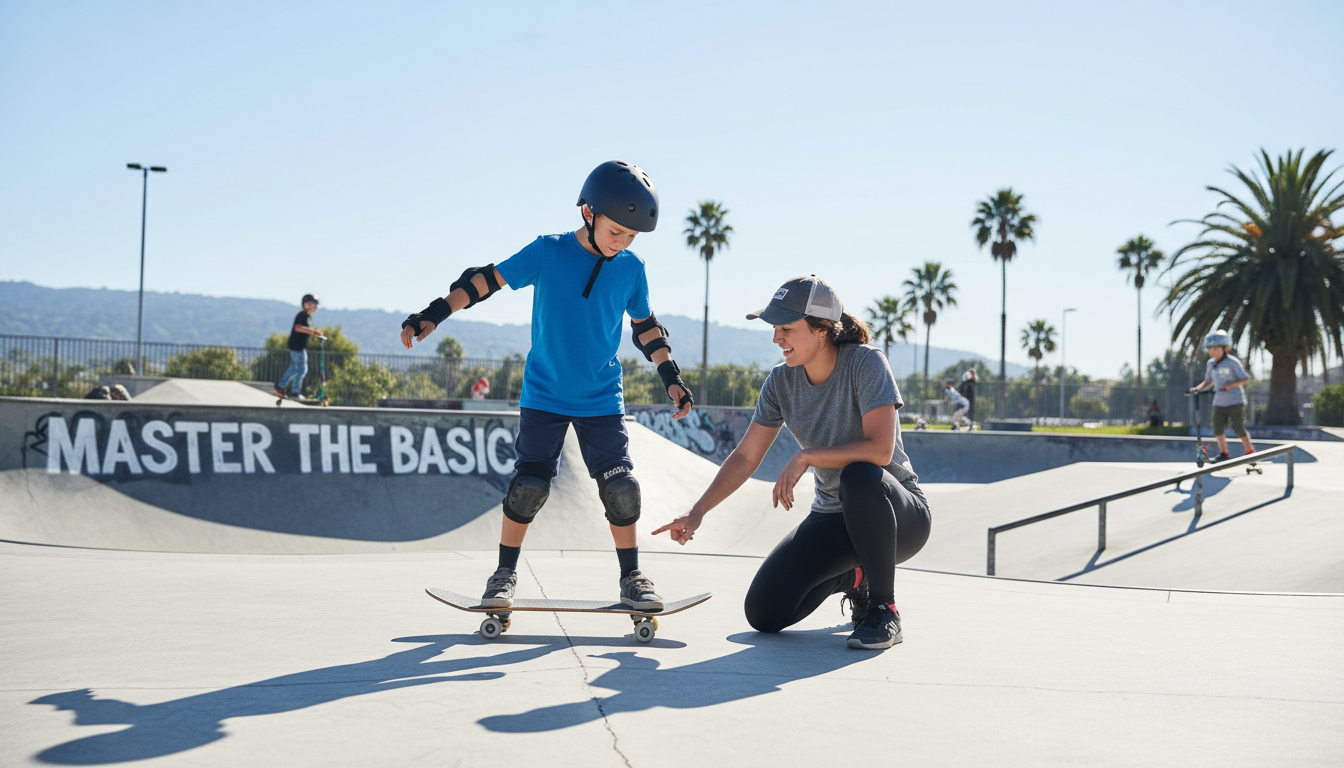
The biological instinct to extend your arms when losing balance is your greatest liability on the pavement. Catching yourself with rigid, straight arms, often referred to as a FOOSH (Fall On Outstretched Hand) injury, is the primary cause of wrist fractures and shoulder dislocations. If you look at sports medicine data to find what is the most common injury in skateboarding, the results consistently point to the wrists and head, both of which are largely preventable through refined technique rather than just equipment.
To master how to fall safely on a skateboard, you must train your body to remain springy rather than stiff. Think of your limbs as shock absorbers that should stay tucked near your torso. By keeping your elbows bent and your muscles relaxed, you avoid the brittle resistance that leads to bone breaks. When you meet the ground with a slight bend in your joints, you allow the impact to dissipate across your larger muscle groups.
This principle of staying compact leads directly into the tuck and roll, the gold standard for high-performance safety. Instead of a hard stop, you are preparing your body to rotate. By tucking your chin and narrowing your profile, you protect your head and prepare for the fluid shoulder rolls used by professionals to exit high speed maneuvers with minimal impact.
How to Fall Forward Using the Shoulder Roll
When momentum carries you forward, the objective is to convert linear speed into circular rotation. This technique, often referred to as the Parkour-roll, is the gold standard for high-speed bails on concrete. While some beginners are taught a "rag-doll" style, which involves going limp to avoid tension during a low-speed flop, the shoulder roll is an active, controlled maneuver designed for the higher velocities encountered in professional coaching. It ensures you do not come to a sudden, jarring halt that could lead to internal or joint injuries.
To execute a technically sound shoulder roll, follow this sequence: 1. Tuck your chin firmly toward your chest. This creates a rounded profile and protects the head and neck from whip-like contact with the ground. 2. Lower your center of gravity by bending the knees and lead with the outer edge of one shoulder, angling it toward the pavement. 3. Roll diagonally across your back. Your contact path should start at the leading shoulder and exit near the opposite hip, avoiding direct impact with the spine. 4. Keep your limbs tucked and springy, allowing your body to act as a wheel rather than a dead weight.
The secret to how to fall safely on a skateboard during a forward bail is the maintenance of motion. By rolling through the impact, you dissipate kinetic energy across a larger surface area. This prevents any single point of your body from absorbing the full force of the fall. At Malibu Skate Academy, we emphasize that the roll should feel like an extension of the trick. By mastering this diagonal transition, you can often roll back onto your feet, preserving your flow and minimizing the physical toll of the session.
Managing Backwards Falls and Avoiding the Tailbone
While forward momentum allows for the shoulder roll, losing your balance over the heel edge often results in the board shooting forward. This scenario, frequently compared to slipping on a banana peel, requires a specific technique to protect the spine and head. Learning how to not fall backwards on a skateboard involves lowering your center of gravity the moment you feel the board slip away from your center of mass.
The primary defense against a rear impact is the butt-slide. As you descend, compress your legs to stay low, reducing the distance to the ground. Aim to land on the meaty portion of your glutes rather than the tailbone. Directly impacting the coccyx can lead to long term discomfort and severe bruising. Once your glutes make contact, immediately roll to one side. This lateral movement prevents your spine from absorbing the full vertical force and keeps your momentum moving rather than coming to a jarring stop.
Preventing a head injury is the most critical component of a backwards fall. You must consciously tuck your chin firmly against your chest to combat the whiplash effect. This tension in the neck muscles keeps the back of the head from snapping against the concrete. By integrating these movements, you master how to fall safely on a skateboard even when caught off guard. This controlled descent is a core focus during our adult skateboarding lessons and youth sessions alike, ensuring every student develops the reflexes to protect their most vulnerable areas.
Knee Sliding: Using Your Pads to Your Advantage
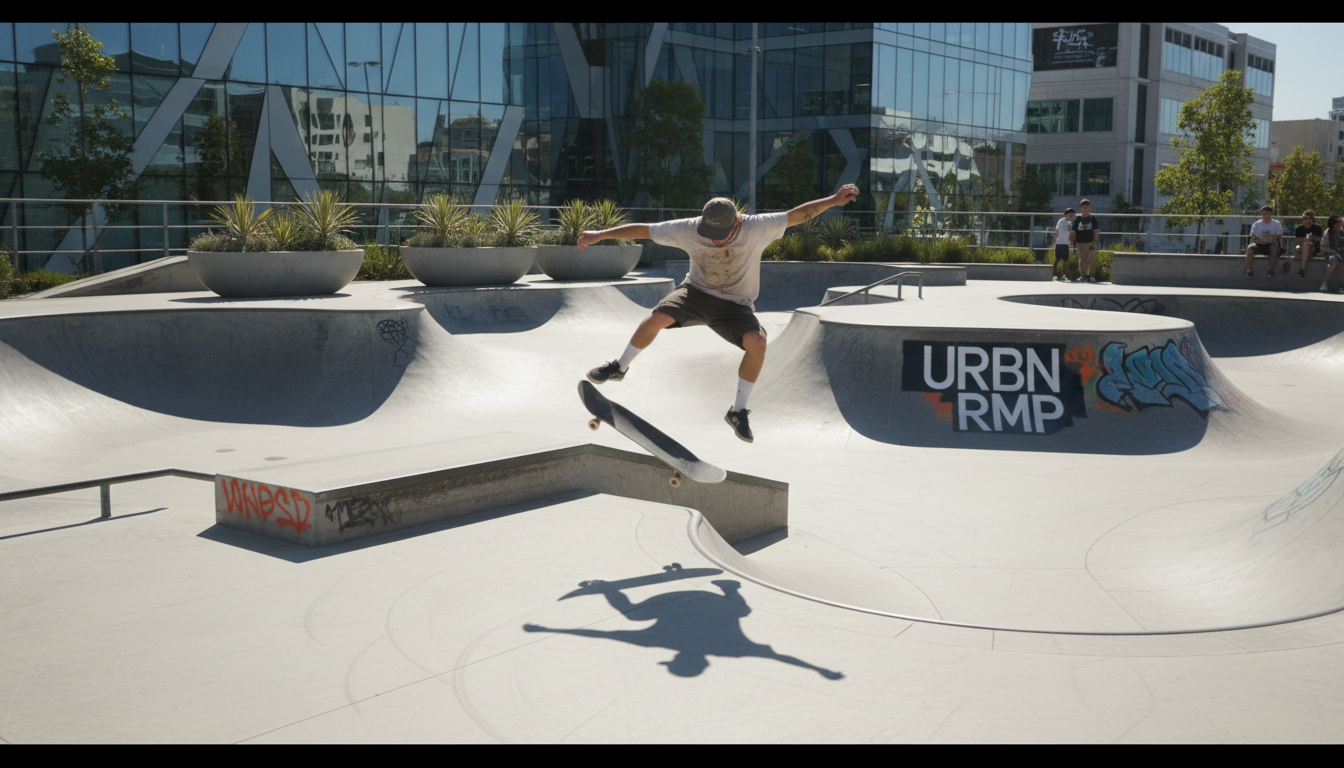
Transitioning from flat ground to the vertical walls of Los Angeles area skateparks requires a specialized safety technique known as the knee slide. In bowl and vert environments, the goal is to utilize the architecture of the ramp to dissipate energy. If you lose balance or miss a trick while moving through a transition, the most effective response is to drop directly onto your knee pads.
To execute this correctly, drop to both knees while simultaneously leaning your torso back. This backward lean ensures that the high impact caps of your pads maintain contact with the surface, allowing you to glide smoothly down the curve toward the flat bottom. Mastering this slide is a fundamental part of how to fall safely on a skateboard, turning what could be a jarring impact into a controlled, professional exit. We prioritize this technique in our adult skateboarding lessons and youth programs to ensure students can navigate deep concrete bowls with confidence. Learning to slide effectively is the mark of a disciplined skater who understands the physics of their environment.
How to Practice Falling in a Controlled Environment
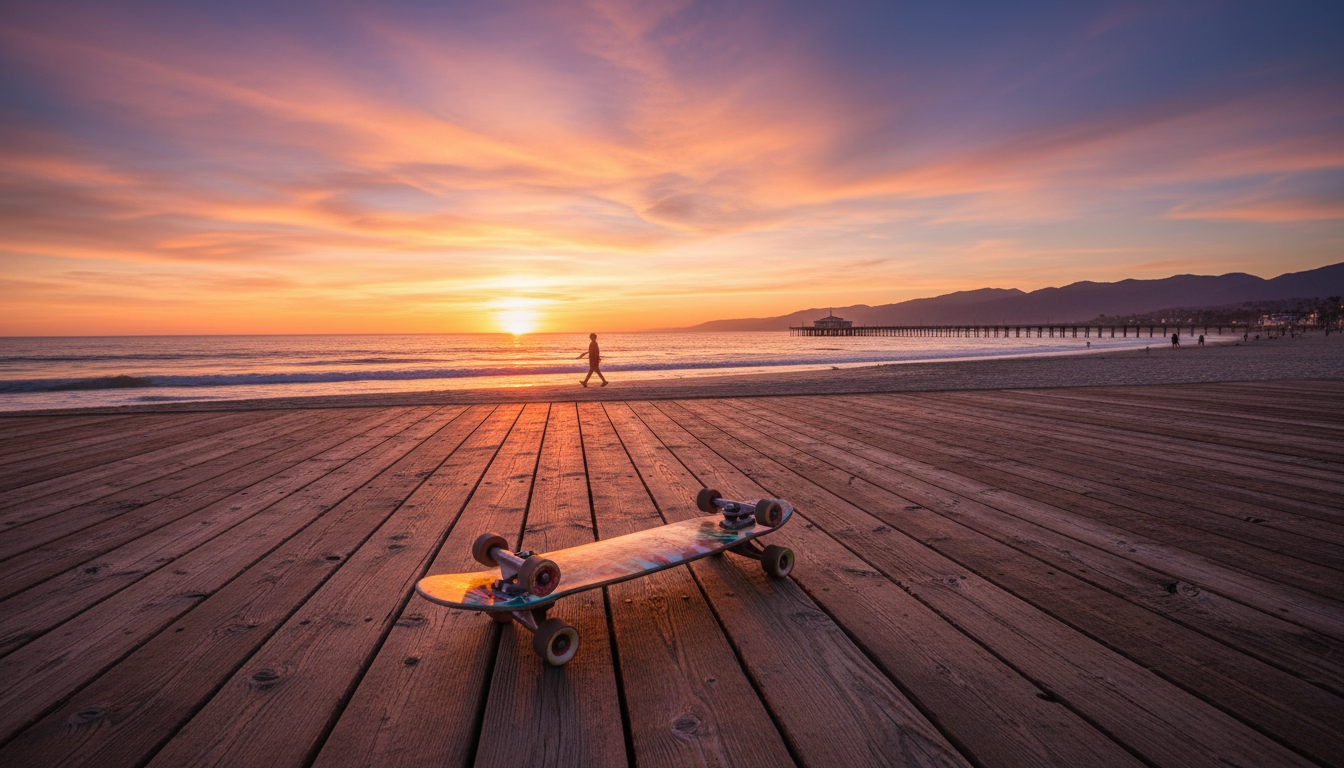
Muscle memory is the foundation of safety. To master how to practice falling on a skateboard, you must move beyond intellectual understanding and into instinctive physical reaction. Begin by isolating the movements without the skateboard. Choose a forgiving surface; while many use grass or carpet, our students in Malibu have the unique advantage of the soft sands at Zuma or Surfrider Beach. This environment allows for high-repetition practice with minimal physical toll.
Start with stationary shoulder rolls and butt-slides directly on the sand. Once the motion feels fluid, introduce the board on a flat, non-rolling surface like a thick patch of grass. Practice stepping off the deck and transitioning immediately into a roll. As your confidence grows, move to a slow roll on a smooth, flat pavement. The objective is to rehearse the bail until it becomes your default response to a loss of balance. This systematic approach ensures that when a real slam occurs on concrete, your body executes the technique before your mind has time to panic. If you are unsure about your form, booking a free introductory lesson allows an instructor to critique your mechanics in a safe, supervised setting.
Overcoming the Fear of Falling and Building Confidence
The psychological barrier to progression is often the uncertainty of the outcome rather than the technical difficulty of the maneuver. Fear thrives in the unknown. By mastering how to fall safely on a skateboard, you neutralize the mental blocks that prevent commitment to a new trick. Confidence is built when you realize that a failed attempt is simply a controlled transition to the pavement rather than a chaotic event.
Professional coaching, specifically 1-on-1 sessions, provides a critical advantage by identifying bad falling habits that the skater cannot perceive. An instructor can spot subtle cues, such as a rigid wrist or an improperly tucked chin, before these dangerous reactions become permanent muscle memory. This personalized feedback makes skateboarding lessons near me significantly safer than self-teaching, where errors often go uncorrected until an injury occurs. For those seeking to accelerate their progress in a structured environment, starting with a free introductory lesson allows for an immediate assessment of these foundational safety skills.