The most effective skateboard tricks to learn in order begin with mastering balance through manuals and kickturns before progressing to the foundational ollie. After perfecting the ollie while moving, beginners should learn the frontside 180 and shuvit to build the technical control required for their first kickflip.
Staring at a pristine board while struggling to land a basic kickflip is a common frustration for new skaters, often resulting from a lack of technical structure. Many enthusiasts attempt advanced maneuvers before mastering the mechanics of weight distribution, which leads to stalled progress and avoidable falls. At Malibu Skate Academy, we know that true mastery is built through a deliberate, sequential approach. By following a proven progression, you develop the muscle memory necessary for high level performance. This guide outlines the precise roadmap for your development, starting with foundational board control and the essential mechanics of the ollie. You will learn to transition into rotational tricks like pop shuvits and 180s before finally tackling the technical nuances of your first kickflip. Along the way, we will address common mistakes and explain how professional coaching can accelerate your evolution on the pavement.
Why Following a Specific Skateboard Trick Progression Matters
Skateboarding is a cumulative skill where every movement builds upon the last. Attempting to master high-level maneuvers without a solid foundation often leads to the common beginner plateau, where progress stalls and frustration sets in. Worse, skipping essential steps increases the risk of unnecessary falls because the body has not yet developed the required muscle memory or recovery instincts. At Malibu Skate Academy, we teach our students that skateboarding isn't just about the tricks; it is about board feel. This intuitive connection between your feet and the deck allows you to anticipate how the board will react in various environments, from a smooth park floor to a weathered sidewalk.
We view the list of skateboard tricks to learn in order as a structured curriculum rather than a random collection of moves. Just as a musician learns scales before a concerto, a skater must develop balance and spatial awareness through foundational movements. By following a professional progression, you ensure that each new skill is supported by the one before it. This systematic approach is the most efficient way to achieve consistency, safety, and style. For those looking to establish this foundation under expert guidance, booking a free introductory lesson is the first step toward technical proficiency.
Phase 1: Essential Board Control Before Your First Trick
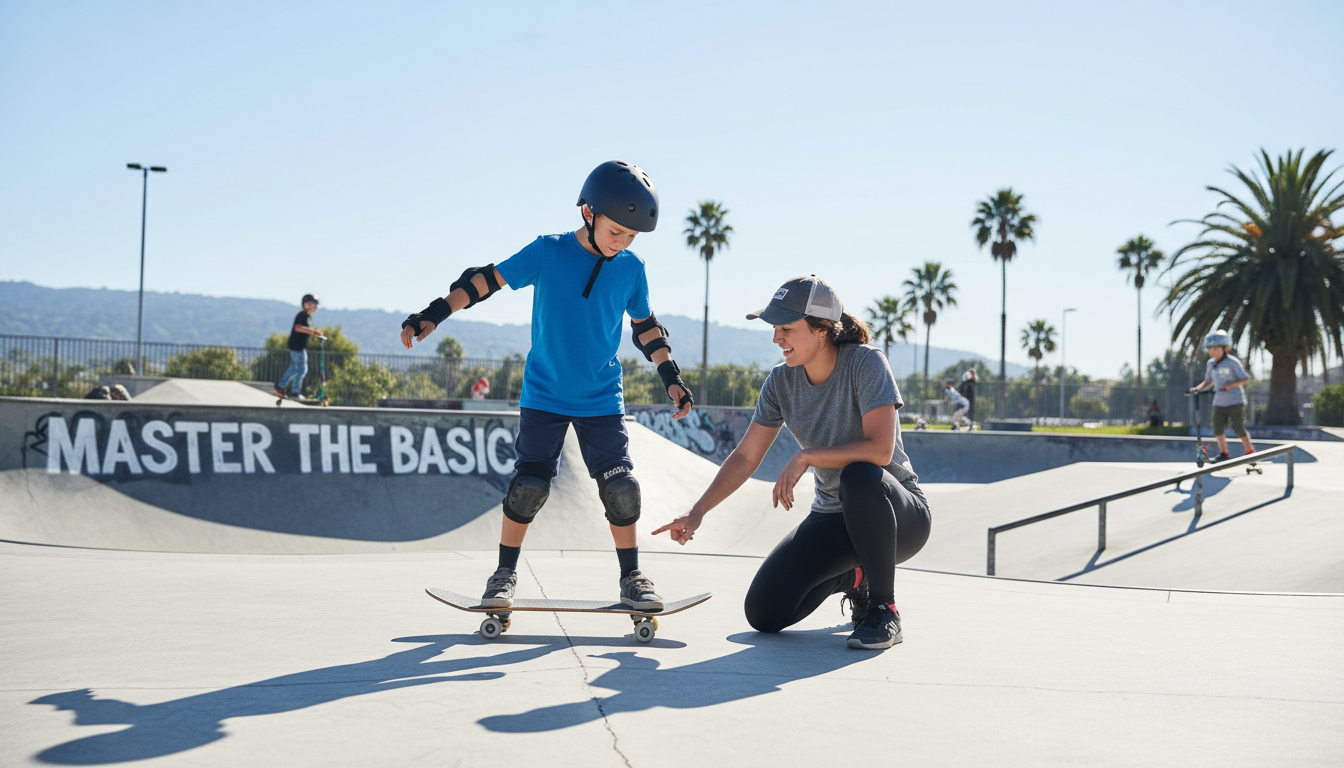
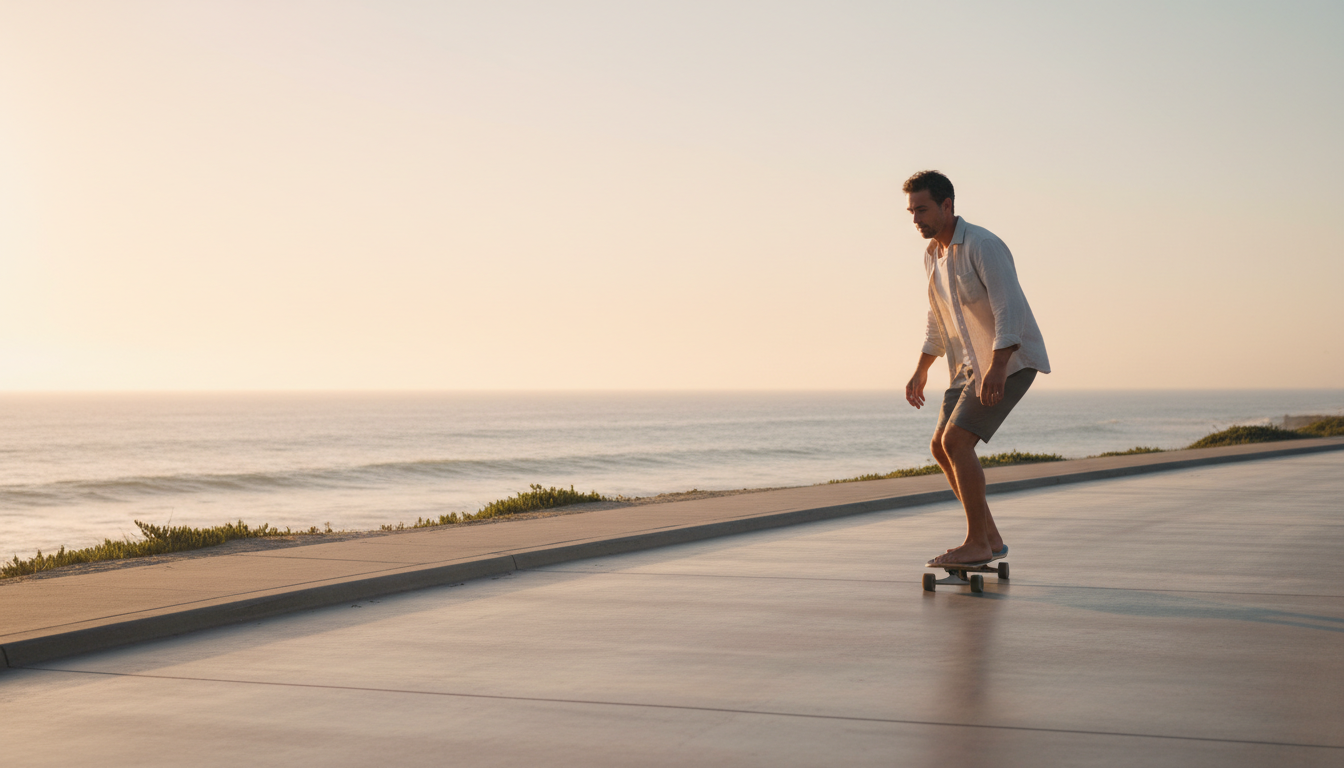
Before you ever attempt to leave the ground, you must master the art of staying on it. The most common mistake beginners make is rushing to pop before they can effectively navigate. True board control starts with building the stabilizing muscles in your ankles and calves. We recommend practicing these foundational maneuvers on smooth, flat surfaces like the Malibu beach boardwalks, where you can focus on technical precision without fighting rough pavement or debris.
The first movement to master is the tic-tac. This involves lifting the front trucks slightly and swinging the nose of the board back and forth to generate forward momentum. It teaches you how to shift your weight between your front and back feet without losing balance. Once you can move across a flat surface using only tic-tacs, you have established the fundamental weight distribution required for the list of skateboard tricks to learn in order.
Next, progress to kickturns, both backside and frontside. A kickturn requires a deeper pivot, often 90 to 180 degrees. Backside turns, where you turn with your back toward the direction of the turn, usually feel more natural first. Frontside turns require more commitment and specific shoulder rotation. These movements are the direct precursors to 180 degree ollies and help you understand how your upper body dictates the board's direction.
Finally, introduce the stationary and rolling manual. By balancing on the back two wheels without letting the tail scrape the ground, you develop the sweet spot awareness necessary for landing tricks. If you struggle with these foundational movements, private skateboarding coaching can provide the immediate feedback needed to correct your center of gravity. Being comfortable riding at speed is a non-negotiable prerequisite for any trick. If you cannot comfortably carve and stop while moving quickly, your body will instinctively tense up during an ollie, leading to a higher risk of injury. Mastering these basics ensures that when you finally do pop, you have the muscle memory to stay centered.
Phase 2: Master the Ollie (The Gateway to Everything)
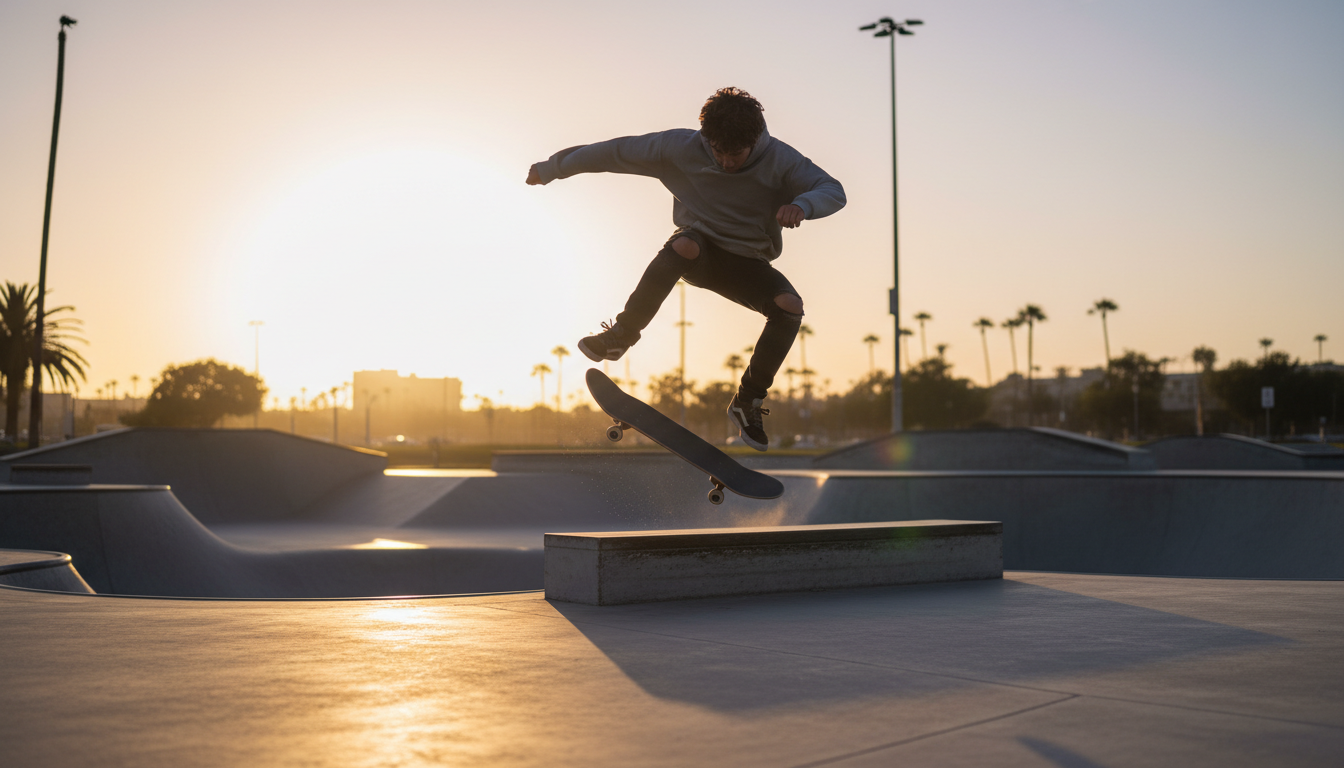
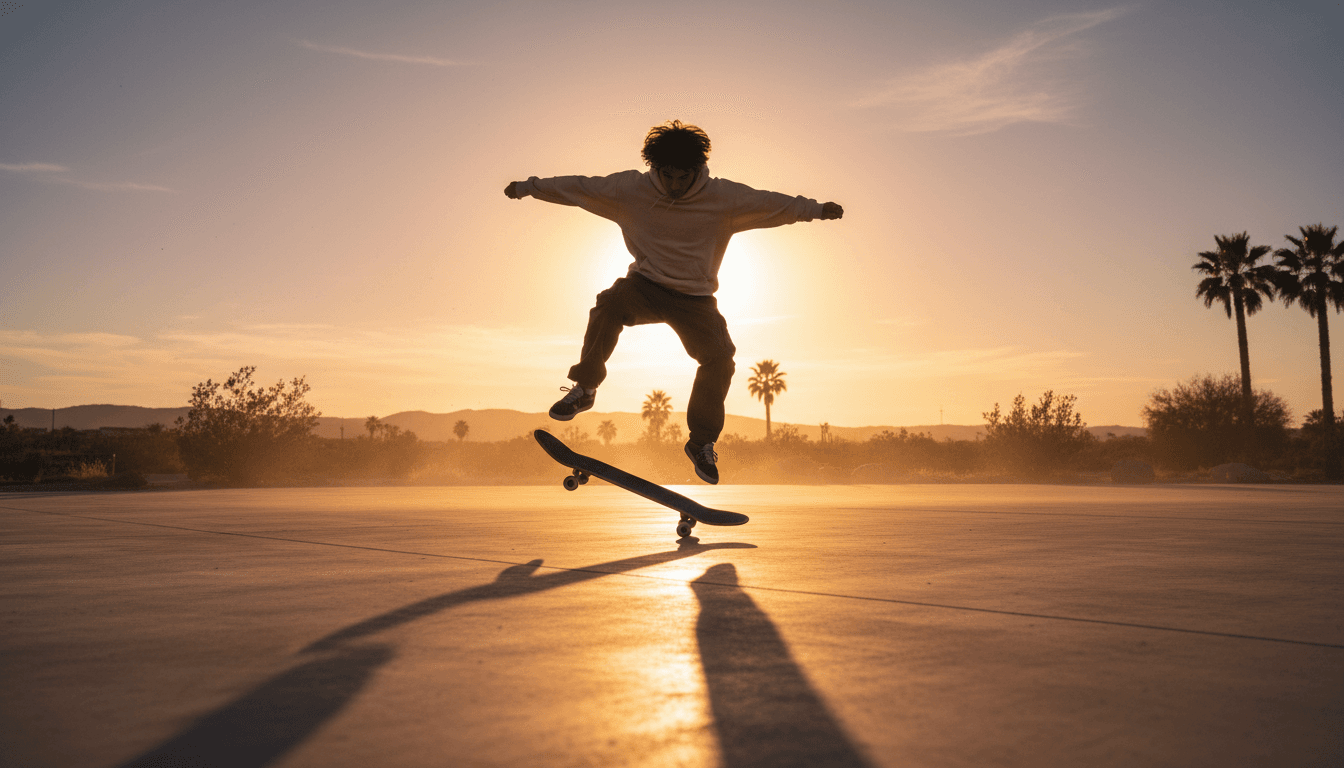
Once you have developed the necessary board feel through manuals and kickturns, you are ready to tackle the most significant milestone in the list of skateboard tricks to learn in order: the ollie. This maneuver is the bridge between riding and performance, serving as the mechanical basis for nearly every flip trick and grind you will eventually learn.
Many prospective skaters ask if it is easy to ollie. The reality is that while the movement looks fluid, it is a highly technical sequence that requires precise muscle memory and timing. It is the first time you are asking the board to defy gravity, and it often takes weeks of dedicated practice to achieve consistent airtime. At Malibu Skate Academy, we break the ollie down into four distinct phases to help students visualize the physics of the jump.
The Load: This is the preparation phase. Your front foot should be placed roughly two inches behind the front bolts, while the ball of your back foot rests on the center of the tail's edge. Compress your knees toward your chest, keeping your weight centered. A common error we see in adult skateboarding lessons is leaning too far over the toes; your spine should remain vertical over the center of the deck to maintain a neutral center of gravity.
The Explosive Pop: As you spring upward, your back ankle must snap the tail against the ground. This pop needs to be sharp and instantaneous. The moment the tail makes contact with the pavement, your back foot must already be traveling upward to allow the board the space it needs to rise.
The Front Foot Slide: Simultaneously, your front foot rolls onto its side. You must drag the outer edge of your shoe up the grip tape toward the nose. This friction is what grips the board and pulls it into the air. If you do not slide your foot, the board will simply pop up and fall back down.
The Level Out: At the peak of your jump, push the nose forward with your front foot while pulling your back knee up toward your chest. This levels the board out horizontally.
Professional coaching tip: focus on your shoulder alignment. If your shoulders rotate during the pop, your hips and board will follow, leading to an unstable landing. Keep your shoulders parallel to the board at all times. To begin, find a sidewalk crack to lock your wheels in place. This provides the stability needed to focus on the mechanics without the board rolling away. Once you can land consistently, transition to a slow, controlled roll to begin integrating momentum into your pop.
Phase 3: Pop Shuvits and Frontside 180s
Once you have achieved a consistent, level ollie, the next logical phase in the skateboard tricks to learn in order is introducing rotation. Pop shuvits and frontside 180s represent two different ways to manipulate the board's axis. While an ollie focuses on vertical lift, these maneuvers teach you how to control the board while it moves independently of, or in sync with, your body.
A pop shuvit is the ideal entry point for board rotation because it does not require the complexity of a flip or a full body turn. Your torso remains square while the board rotates 180 degrees beneath you. The key is the "scoop" with your back foot. Position the ball of your back foot in the pocket of the tail, the curved area where the wood begins to rise. Your front foot should hover over the center of the deck, acting as a guide rather than a driver. Unlike a standard shuvit, which is a flat rotation that skims the ground, a pop shuvit requires a distinct vertical snap followed by a backward pressure from the back ankle. This creates the height needed to catch the board in the air with your front foot.
Frontside 180s shift the focus to body synchronization. In this trick, you and the board rotate together. This maneuver highlights a fundamental rule we emphasize in private skateboarding coaching: the board follows your shoulders. To execute this, set up with your front foot slightly closer to the toe-side edge than a standard ollie. As you initiate the pop, swing your leading shoulder open toward your back. This rotational momentum carries through your hips to your feet. Learning to land and immediately roll away in a "switch" or backwards stance is a vital skill that broadens your versatility on the board.
Phase 4: The Milestone (How to Learn Your First Kickflip)
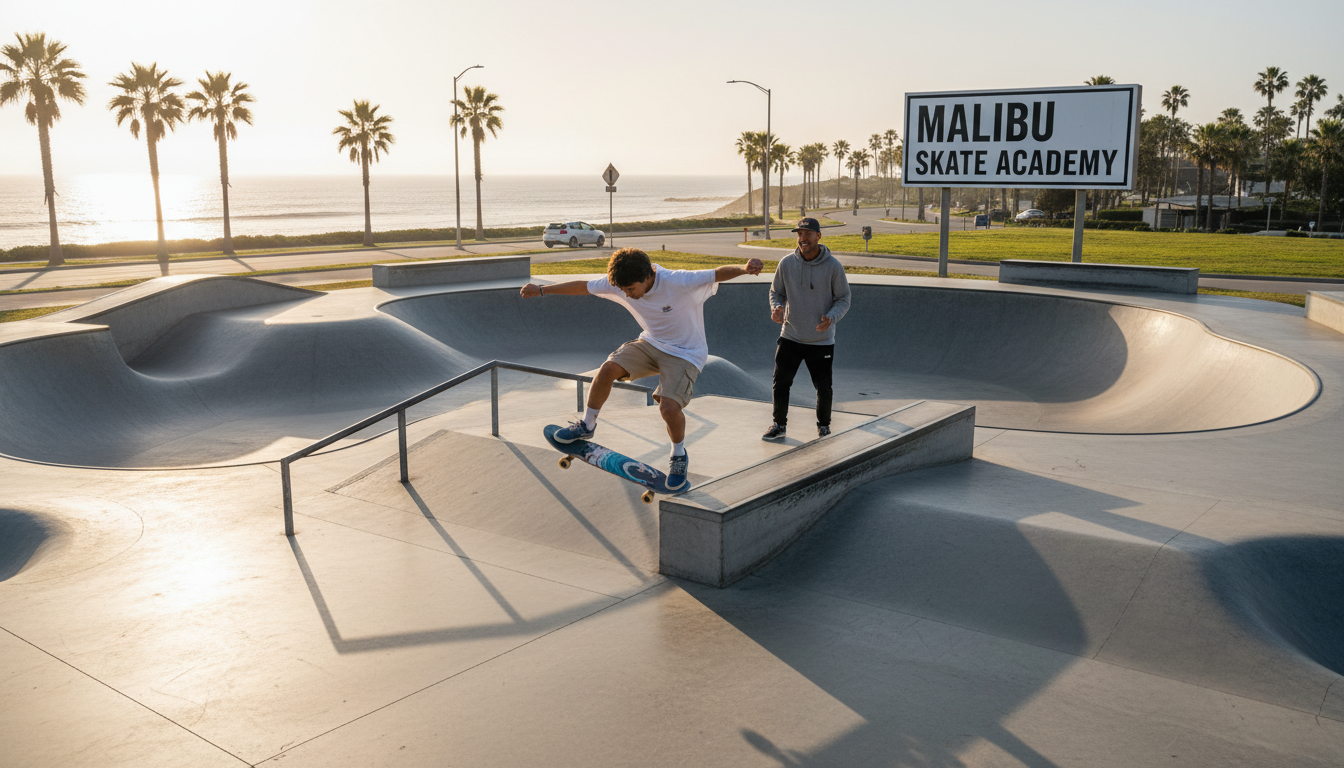
The kickflip is often the most coveted milestone in the sequence of skateboard tricks to learn in order. It represents a significant shift from basic maneuvers to the world of technical flip tricks, requiring a level of precision that exceeds the foundational ollie. A common question prospective students ask is how long it takes to learn. While some find the rhythm in a few weeks, for most, it takes several months of deliberate practice to develop the necessary ankle dexterity and timing. It is a test of patience as much as it is a test of skill.
While the kickflip shares the load and pop mechanics of an ollie, it diverges significantly during the lift phase. Instead of sliding your front foot straight up to level the board, you must guide the outer edge of your shoe diagonally off the pocket of the nose. This is the flick. We recommend that students practice the flick motion off the board first. Stand on the ground and simulate the front foot drag, focusing on the outward snap of the ankle. This isolates the muscle memory and allows you to understand the exit point on the deck without the distraction of maintaining balance while rolling.
When transitioning back to the board, focus on correcting these common technical errors:
Avoid Mobbing the Flip: Many beginners kick their front foot downward toward the ground. This mistake, known as mobbing, forces the board to flip but makes it impossible to land. The flick must travel out and slightly up to allow the board to level out beneath you.
The Commitment Gap: Landing with only one foot on the board is a psychological hurdle. It usually indicates that your weight is shifted too far back or that you are not pulling your back knees up high enough.
Shoulder Alignment: Just as with the ollie, your shoulders must stay parallel to the bolts. If you turn your chest forward, the board will rotate beneath you, leading to a dangerous landing.
Mastering the kickflip is a process of refining inches. If your progress feels stalled, private skateboarding coaching can provide the external perspective needed to identify if your foot placement is off by a fraction or if your pop timing is slightly delayed. Once this trick clicks, the rest of the technical curriculum becomes much more accessible.
Common Progression Mistakes and How to Fix Them
Even when strictly following the skateboard tricks to learn in order, plateaus often occur due to subtle biomechanical errors that are difficult to self-diagnose. One of the most prevalent setbacks is the Rocket Ollie, where the nose points skyward while the tail stays low. This typically happens because the skater is sliding their front foot up but neglecting the crucial forward push at the peak of the jump. To fix this, focus on pushing the nose of the board away from you once your front foot reaches the top of the grip tape. This leveling motion acts as a lever, pulling the tail up to meet your back foot.
In pop shuvits, many beginners struggle with toe drag, where the front foot touches the ground before the board is caught. This is almost always a result of leaning too far over the toe-side edge during the setup. To stay centered, keep your weight in the
Accelerating Your Progress with Professional Coaching in Los Angeles
While technical fixes like weight distribution are easy to understand in theory, they are difficult to self-correct in the heat of a trick. This is where professional 1-on-1 instruction becomes essential. At Malibu Skate Academy, we provide a premium, minimalist environment designed to accelerate your mastery of the skateboard tricks to learn in order. Having a certified coach to physically adjust your foot placement or catch a slight shoulder misalignment is significantly more efficient than interpreting generic YouTube tutorials.
Our private skateboarding coaching cuts the learning curve in half by providing the immediate feedback needed to prevent injuries and ingrained bad habits. We serve a wide demographic in Los Angeles, offering specialized instruction for kids aged 7 to 16 and young adults aged 18 to 30. For those seeking adult skateboarding lessons, our focus on technical board feel ensures a safer, more professional experience. By starting with a free introductory lesson, you gain access to expert observation that transforms frustrating plateaus into consistent, stylish progress.